Underground Collaborative Transportation for Small Mining Dump Trucks & LHDs
This scheme applies to short/medium-distance ore/muck transportation at underground mining faces of small and medium-sized mines, adapting to narrow roadways, low headroom and multi-curve working conditions. It achieves seamless loading-transfer-unloading coordination, balances operational efficiency and costs, and complies with relevant underground mining safety regulations.
Standby equipment: ≥20% of operating units (at least 1 unit for emergency failure handling)
3. Collaborative Operation Process
3.1 Pre-operation Preparation
Inspect equipment (hydraulic/braking/tires) and safety devices for normal operation; clear the operation route, confirm ≥0.5m roadway safety clearance and unobstructed unloading points; conduct personnel safety disclosure, specify operation routes/communication methods, and implement the rule of “no pedestrians during vehicle operation”.
3.2 Core On-site Operation
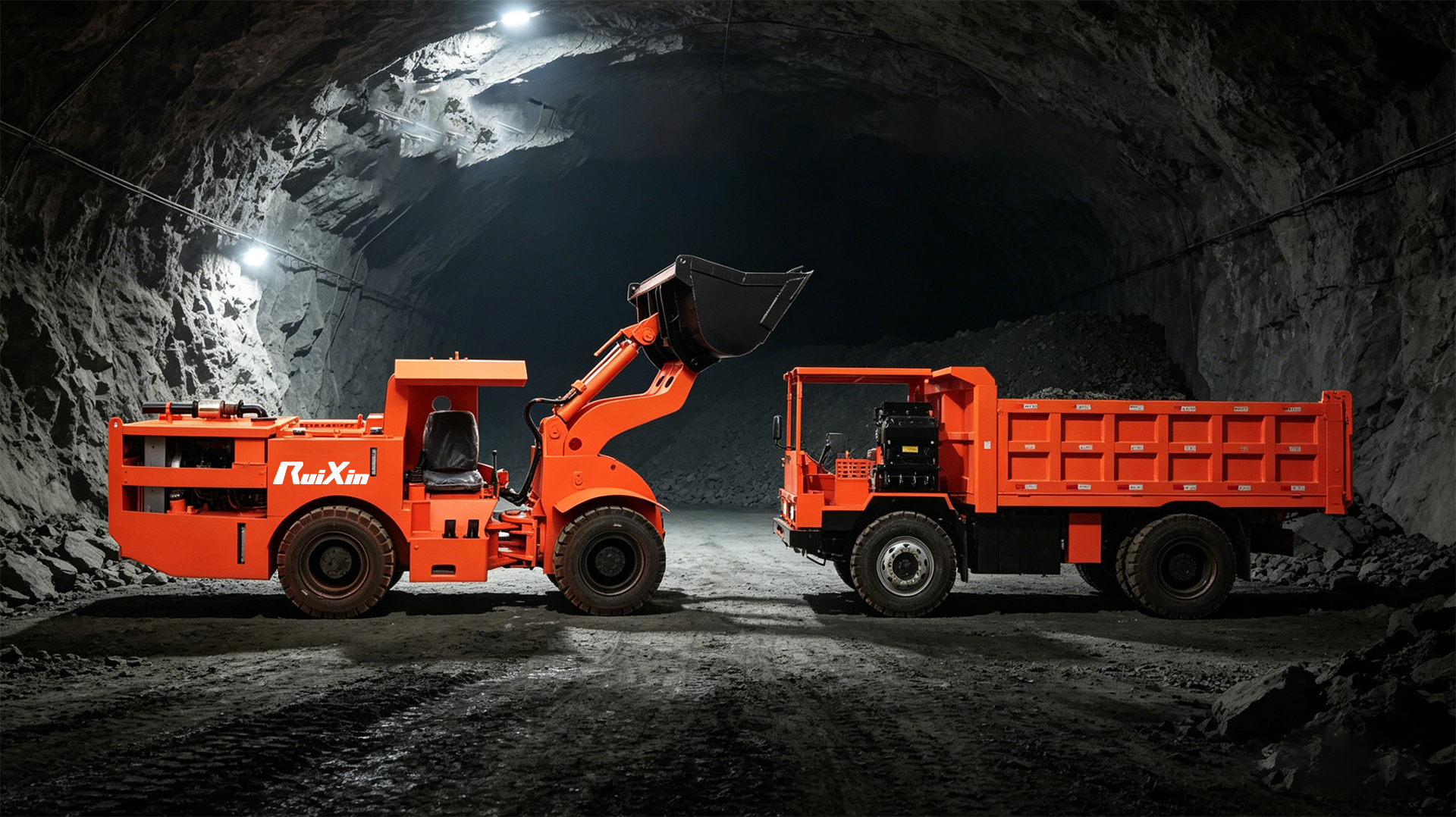
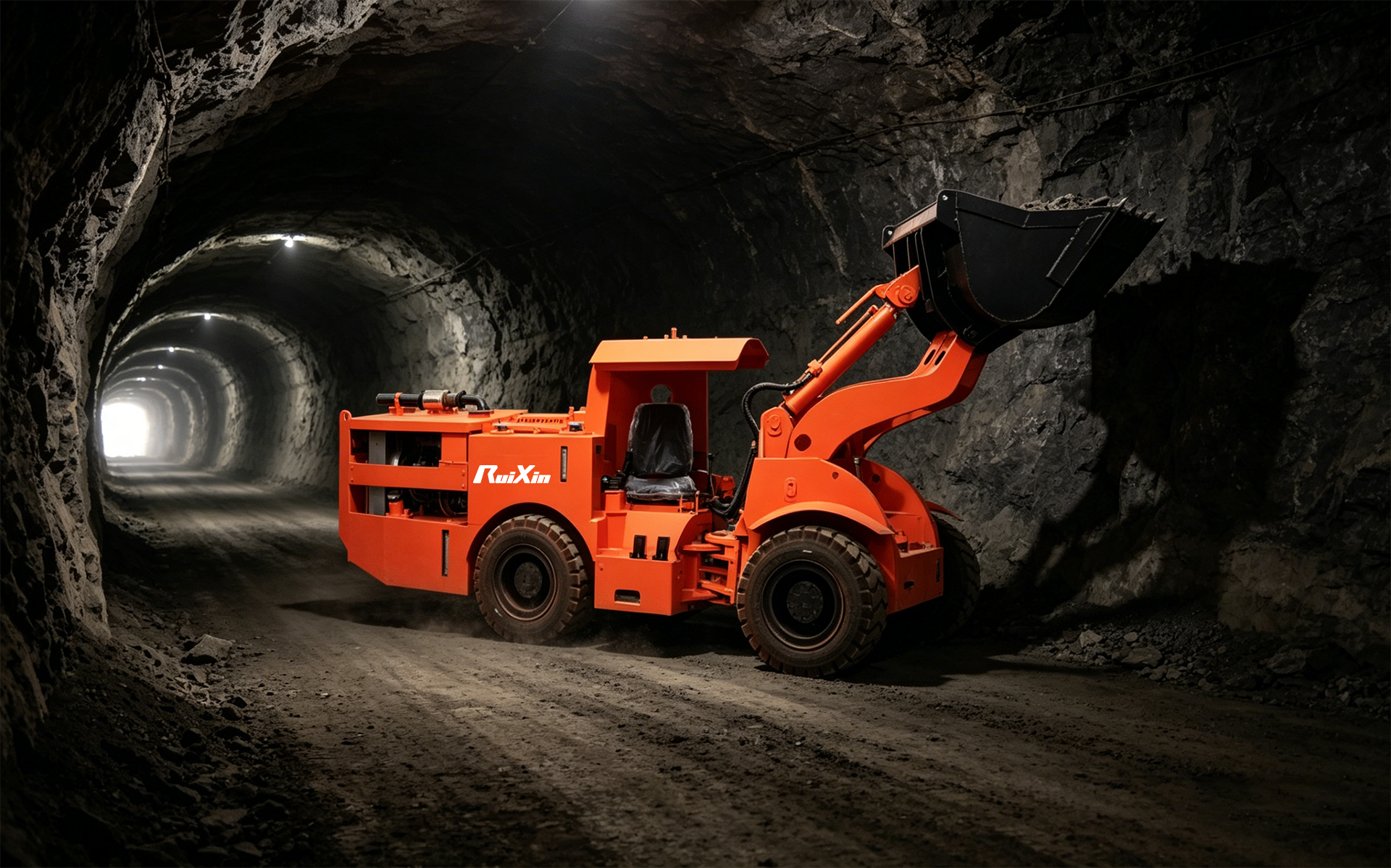
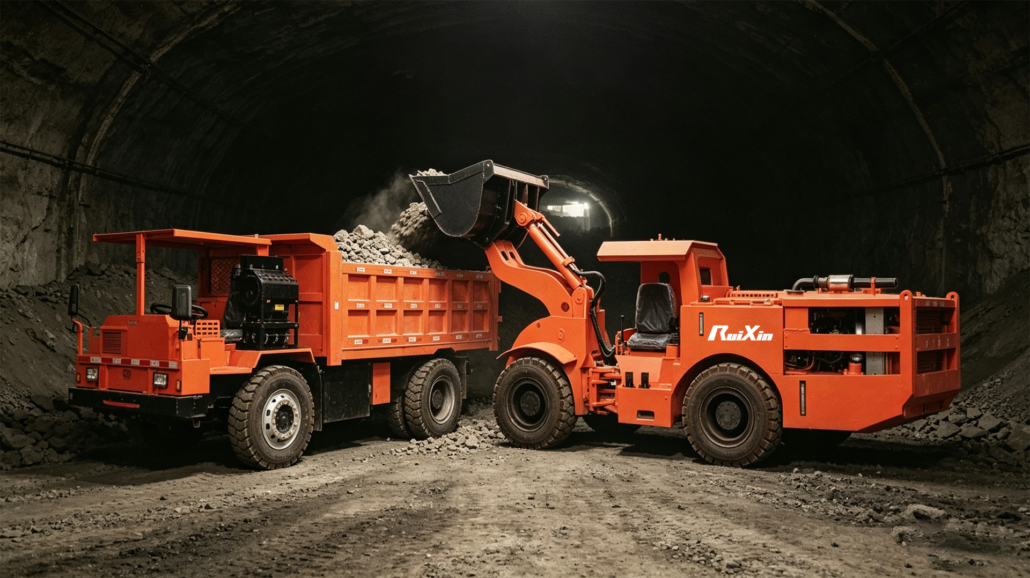
LHD Loading: Adopt V-shaped ore loading method, cut into ore body with bucket teeth 20-30cm above ground (depth ≤70% of bucket capacity); lift bucket at constant speed after full loading (load ≤90% of rated capacity), align with dump truck (distance ≤50cm).
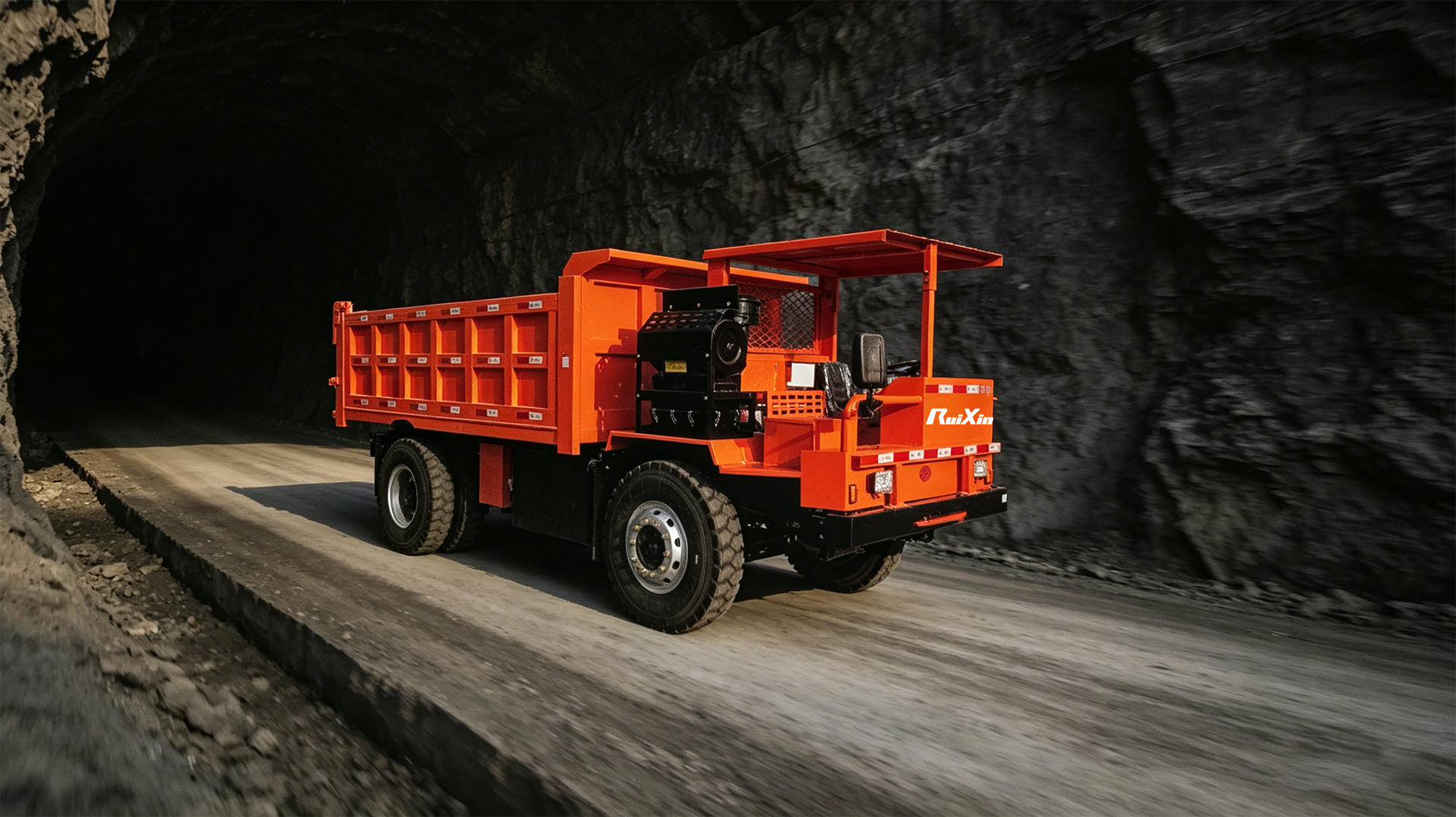
Loading & Transfer: LHD unloads slowly (bucket 0.3-0.5m above cargo box baffle, residue rate <5%); dump truck drives to unloading point at 5-8km/h (≤3km/h at curves/meeting points), keep ≥50m safe distance with preceding vehicles; realize seamless loading-transfer with alternate operation of multiple dump trucks (single cycle time 3-5 minutes).
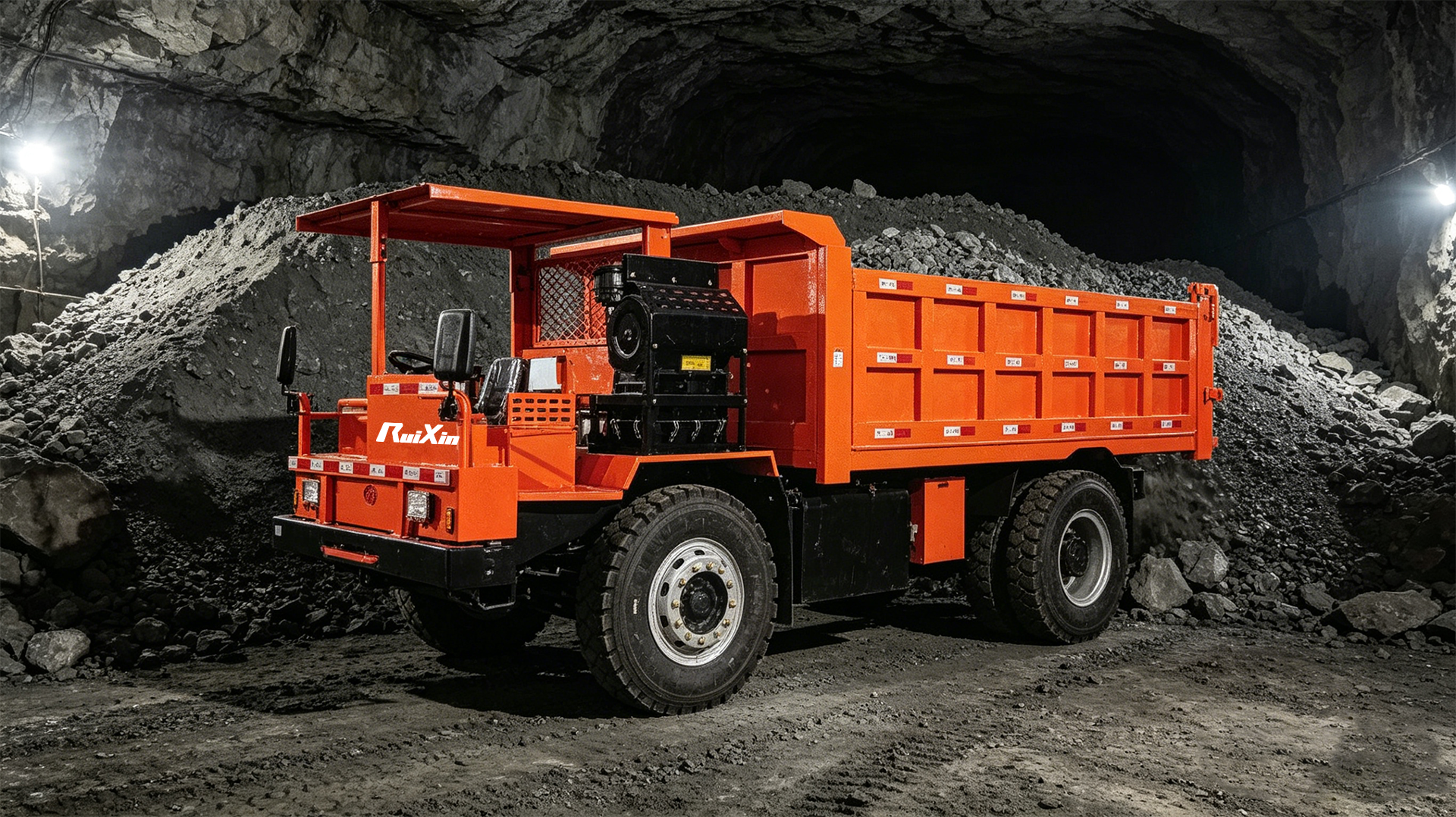
Unloading & Return: Dump truck lifts cargo box to 60-70° for complete unloading after parking stably; return to loading point at low speed, follow “empty vehicles yield to loaded vehicles” at meeting points, with ≥0.5m distance between vehicles.
3.3 Post-operation Closure
Drive equipment to designated maintenance points in order; clean ore/dust on equipment surface, inspect key parts and record operation status; clear scattered materials on the route and keep the operation site clean.
4. Operation Route & Site Planning
Route Design: Adopt one-way circular route (loaded/empty vehicles with separate routes), gradient 3‰-5‰ downhill for loaded vehicles; set passing chambers (≥1.2m×0.7m) every 30-40m, install anti-collision devices at curves, and ensure full coverage of roadway lighting (enhanced brightness at key points).
Area Division: Reserve ≥5m operation space at loading area (no irrelevant personnel/equipment); select straight roadway section for loading point (≥3m space, hardened ground); set retaining walls at unloading point for dust control and ore rolling prevention.
5. Safety Management Requirements
Use qualified mining equipment (explosion-proof type for explosion-proof areas), with service/emergency/parking brakes and on-board fire extinguishers as standard; keep lighting and signal lights on throughout operation.
Strictly prohibit overloading, overspeed, neutral sliding, personnel taking dump trucks and standing under LHD bucket; no personnel walking/working in the transportation route during equipment operation.
Install CO sensors (diesel equipment) and methane sensors (gas areas, alarm concentration ≥0.5%); ensure good underground ventilation without low-wind/windless areas.
Formulate emergency plans for equipment failure/vehicle collision; equip the site with simple maintenance tools and emergency supplies; park faulty equipment in safe areas for maintenance (no maintenance in the middle of transportation routes).
6. Efficiency & Cost Optimization Measures
Efficiency Improvement: Adopt GPS dispatching system to reduce empty driving distance; conduct regular operator training to shorten single cycle time; clean equipment daily to avoid material adhesion affecting loading capacity.
Cost Control: Implement daily equipment maintenance (replace LHD lubricating oil every 500 working hours); prioritize electric equipment to reduce energy consumption; regular inspection of key parts to lower failure rate.
Flexible Capacity Adjustment: Increase/decrease the number of 1 LHD + 1/2 dump truck combinations according to mining face production capacity to avoid transportation lag or equipment idleness.



 English
  Spanish
  Russian