
Underground Ore Haulage Planning: Routes, Trucks and Output
Introduction: How to Plan Underground Ore Haulage Efficiently
Efficient underground ore haulage depends on more than the capacity or speed of a single vehicle. A practical haulage plan must connect the loading point, underground transport route, dumping area, and return journey into one coordinated process. Before selecting an underground mining dump truck, mine operators should evaluate tunnel dimensions, haul distance, road gradient, ore characteristics, loading equipment, and daily production targets. By calculating transport demand and matching equipment to actual working conditions, mines can reduce unnecessary waiting, improve vehicle utilization, and establish a more consistent material-handling system.
1. Map the Complete Underground Ore Haulage Route
The first step is to identify every stage of the material-handling process. A typical underground ore haulage cycle includes loading blasted ore, transporting it through mine roadways, unloading it at a designated location, and returning to the loading point.
Before finalizing the route, check the following conditions:
Tunnel width and height: Confirm that the truck can pass through the narrowest sections with sufficient clearance. Measure the full route rather than checking only the entrance.
Turning space: Identify sharp bends, intersections, loading areas, and unloading points where the vehicle needs additional maneuvering room.
Road gradient and surface: Record the steepest sections, loose rock, uneven ground, and areas that may become slippery.
Travel distance: Measure the loaded and empty return distances separately if the routes differ.
Traffic coordination: Consider passing areas, one-way sections, and the movement of loaders and other underground vehicles.
Route planning should also account for changes in mine development. As the working face moves, haul distances and turning conditions may change. A route that works for the current production stage may require adjustment later.
2. Match the LHD Loader with the Underground Mining Dump Truck
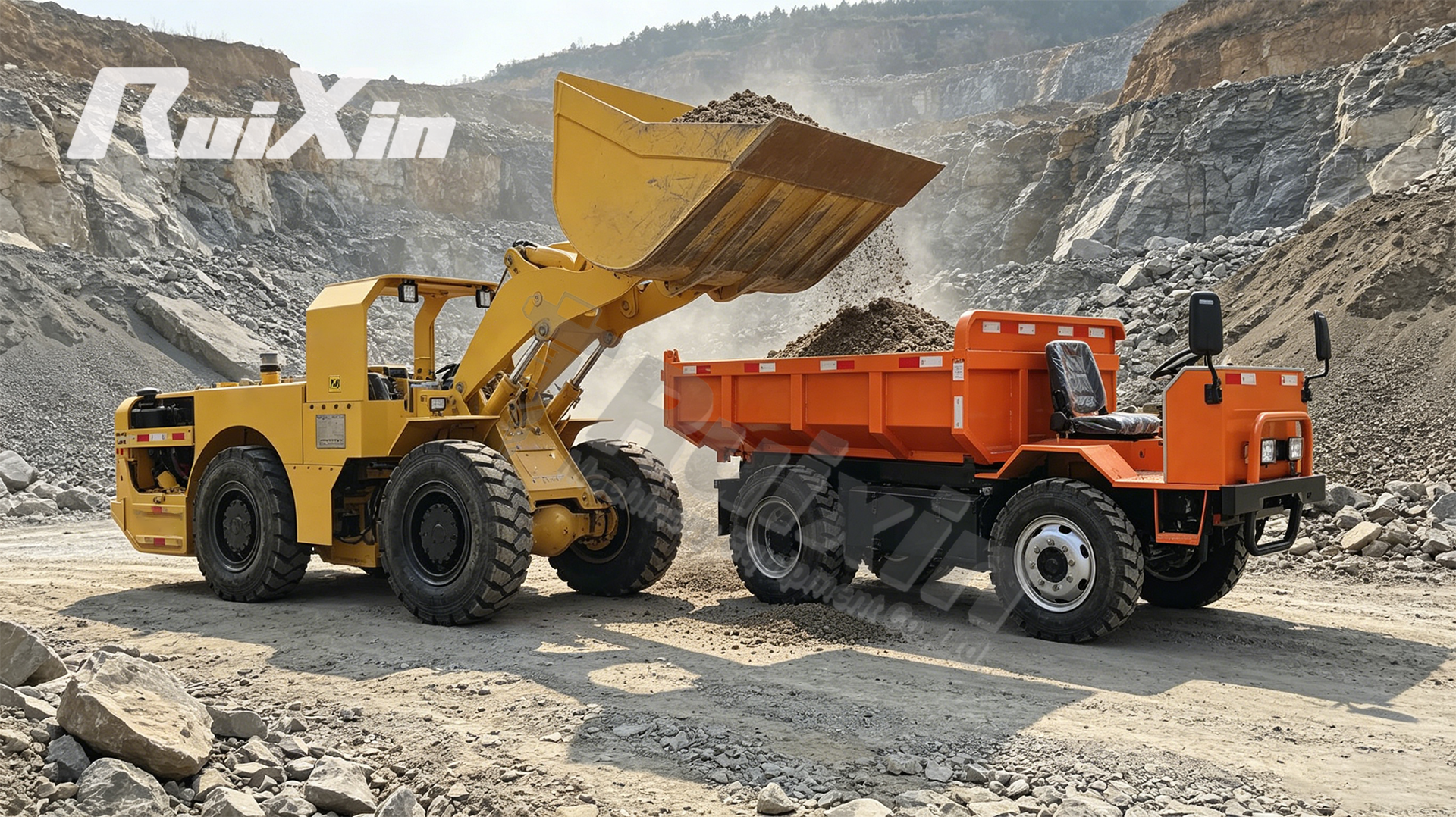
Loading and hauling equipment should be evaluated as one system. An LHD loader transfers blasted ore into the truck, while the truck moves the material to the designated dumping area. If the loader bucket is too small for the truck’s payload, loading may take too many cycles. If the truck is too small for the loader, frequent trips may increase traffic and operating time.
Three factors are especially important when matching the equipment:
Bucket capacity and material density: The same bucket volume can carry different masses depending on ore density, fragmentation, and bucket fill factor.
Truck rated payload: The truck must carry the material within its rated capacity. Cargo box volume alone does not determine the allowable load.
Loading cycle and maneuverability: Consider how many bucket loads are needed to fill the truck and whether both machines can operate efficiently within the available space.
For example, RUIXIN offers a 1 CBM diesel underground LHD loader for underground loading applications. Its bucket capacity is one reference point for equipment matching, but the appropriate truck payload must also account for ore density, bucket fill factor, and the loader’s actual operating cycle.
A useful starting point is to compare the loader’s effective bucket load with the truck’s rated payload. The final combination should be verified against actual material properties and site conditions rather than selected by bucket volume alone.
3. Select the Mining Dump Truck for Actual Site Conditions
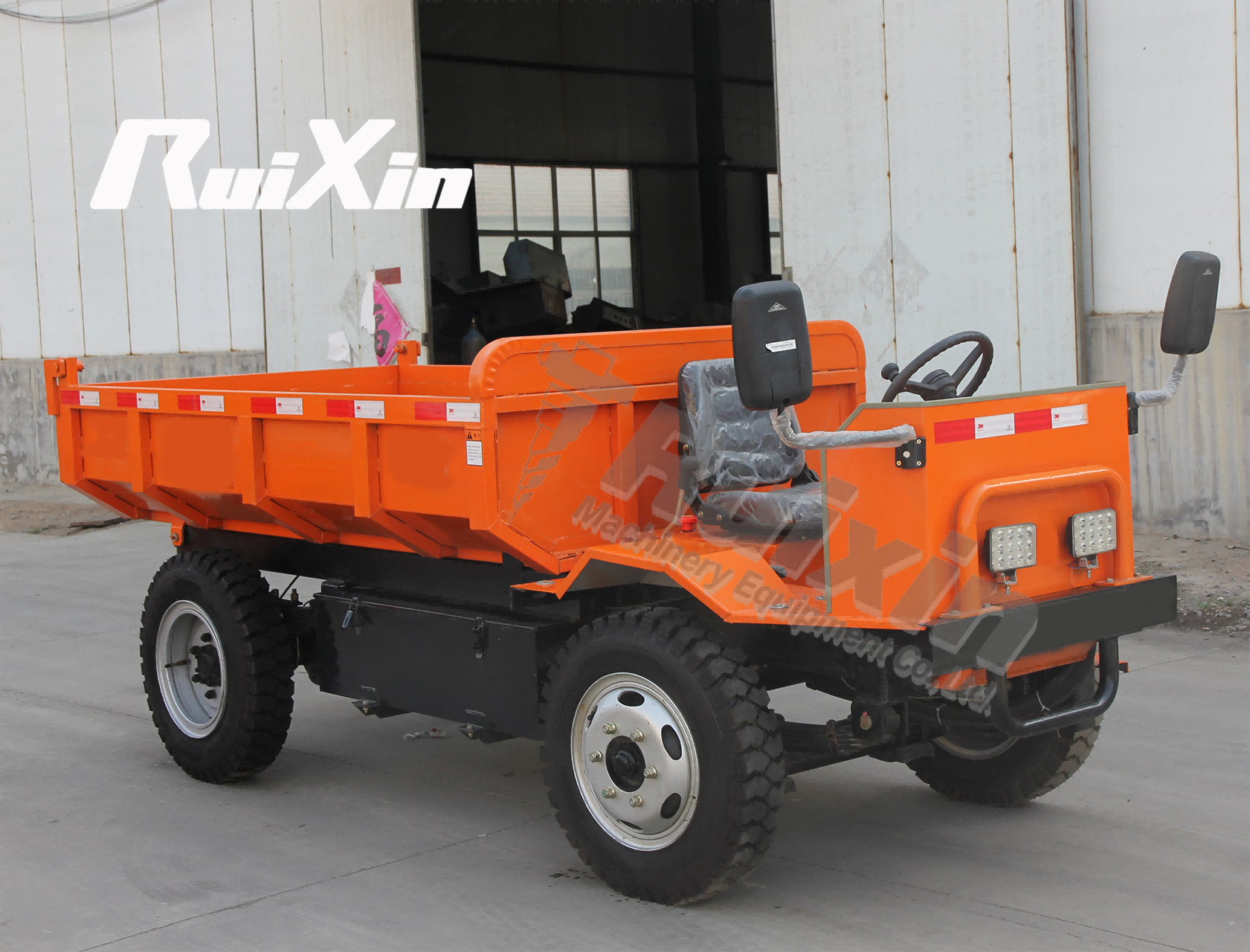
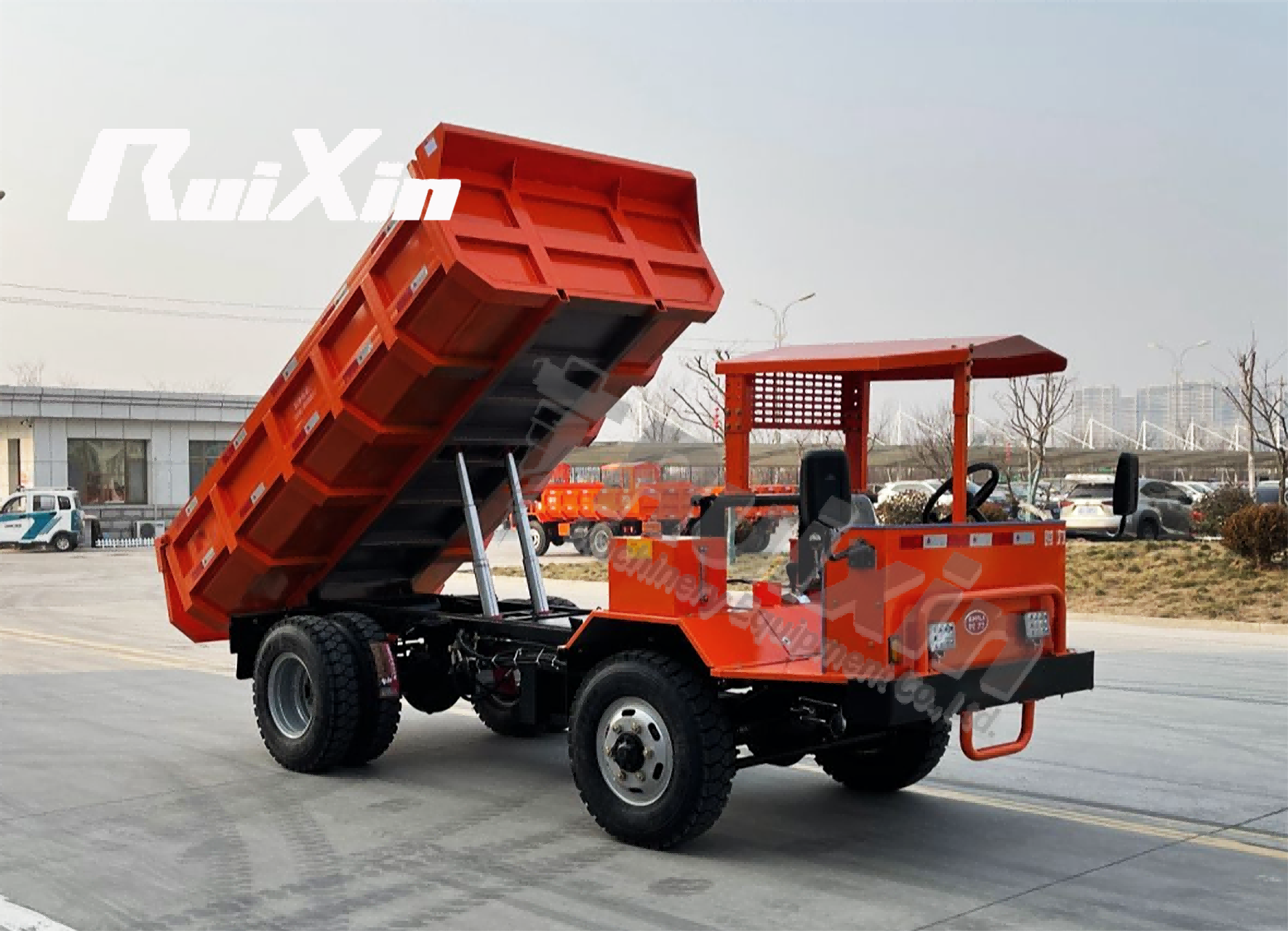
Once the route and production target are defined, select a truck configuration that can meet the transport requirement without creating new bottlenecks. Payload is important, but the decision should also consider tunnel clearance, turning radius, road gradient, surface conditions, power supply, and maintenance access.
Diesel or Electric Power?
Diesel trucks may be suitable for mines that require flexible deployment, extended operating periods, or work in locations without convenient charging facilities. Electric trucks can be considered where charging arrangements are available and reducing vehicle exhaust emissions underground is an operational priority.
Review the RUIXIN underground mining dump truck range for diesel-powered haulage options and the electric mining dump truck series for battery-powered alternatives.
Check Gradeability, Braking, and Clearance
For routes with steep ramps, verify the truck’s specified gradeability against the actual loaded operating conditions. The mine should also evaluate braking performance on descents, traction on loose or wet surfaces, and sufficient clearance along the entire route. Do not select a truck based on a gradeability figure alone without checking the manufacturer’s operating limits and site requirements.
Plan for Maintenance and Vehicle Availability
A haulage system depends on equipment availability as well as rated capacity. Include routine inspections, access to wear parts, maintenance arrangements, and expected downtime in the production plan. A truck that meets the payload target but frequently interrupts operations may not deliver the required daily output.
For a practical example of how loading equipment and haulage vehicles can be coordinated, see the related RUIXIN 1 CBM underground LHD loader project for an African copper mine. The project describes the intended loading and haulage arrangement without assuming unverified production improvements.
4. Common Underground Haulage Planning Mistakes
Even when the equipment is capable of handling the required payload, poor planning can limit overall performance. The following mistakes should be addressed before the haulage system enters regular operation.
Mistake 1: Planning around truck capacity alone.
A high-payload truck may not improve output if the loader cannot fill it efficiently or the route restricts its movement.
Mistake 2: Measuring only the main tunnel.
Narrow sections, low ceilings, sharp turns, and unloading areas can become bottlenecks even when the entrance is wide enough.
Mistake 3: Ignoring delays in the cycle-time calculation.
Loading queues, traffic conflicts, shift changes, and maintenance can all reduce the number of completed trips.
Mistake 4: Using cargo box volume as a substitute for payload.
Ore density varies, so the same volume of different materials can have significantly different weights. Always verify both rated payload and safe loading limits.
Mistake 5: Failing to review operating data.
Record payload, completed trips, cycle time, downtime, and route delays. Use these records to adjust the plan as mining conditions change.
Frequently Asked Questions
1. What Is Underground Ore Haulage?
Underground ore haulage is the process of transporting mined ore from underground loading points to designated dumping areas, transfer points, or other destinations. It commonly involves loading equipment, haulage vehicles, transport routes, and unloading facilities.
2. How Do You Calculate Underground Ore Haulage Capacity?
Multiply the actual payload per trip by the number of completed loaded trips. To estimate daily output, use the planned operating time and cycle time, then account for utilization and expected delays.
3. How Should an LHD Loader Be Matched with a Mining Dump Truck?
Compare the loader’s effective bucket load with the truck’s rated payload, considering ore density, bucket fill factor, loading cycles, and available maneuvering space. Confirm the combination under actual site conditions.
4. Is a Diesel or Electric Mining Dump Truck Better for Underground Haulage?
The answer depends on the mine’s route, working hours, charging infrastructure, ventilation requirements, and maintenance arrangements. Diesel and electric models should be evaluated against the same operating requirements and cost assumptions.
5. What Information Is Needed to Plan an Underground Haulage System?
Start with tunnel width and height, route distance, maximum gradient, ore type and density, daily production target, loading equipment, unloading location, and available operating hours. These details support equipment matching and cycle-time estimates.
Plan Your Underground Ore Haulage System with RUIXIN
An effective underground ore haulage plan connects route conditions, loading capacity, truck payload, cycle time, and daily production requirements. Evaluating these factors together helps mine operators identify bottlenecks and select equipment that fits the actual working environment.
RUIXIN supplies underground mining dump trucks, electric mining dump trucks, and LHD loaders for different mining and tunneling applications. Equipment recommendations should be based on measured site conditions and confirmed technical specifications.
Planning an underground mining project? Send us your tunnel width and height, haul distance, maximum road gradient, ore type, target daily output, and preferred power type. Our team can review your requirements and recommend suitable equipment configurations.
Contact RUIXIN EQUIPMENT
Website: https://miningdumpertruck.com/
Email: sales@ytequipment.net
WhatsApp / Phone: +86 173 5264 7687
Technical Review: RUIXIN EQUIPMENT Engineering Team
Published: October 26, 2026
Last Updated: October 26, 2026

 English
 Spanish
 Russian