The standardization of loader and dump truck coordination operations is directly related to operational efficiency, equipment service life and on-site safety. To establish a standardized operational process, avoid operational risks and improve the quality of collaborative operations, the following seven core operating specifications are formulated in light of on-site practical operation requirements, which all operators must strictly follow.
1. Fixed Positioning Operation, Prohibit Oblique Loading
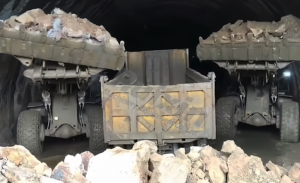
Accurately control the relative position and angle of equipment during operation. The loader body operating angle shall be ≤ 15°, maintain a safe operating distance of 1.0-1.5m from the dump truck carriage, and control the angle between the bucket mouth and the carriage floor within the optimal operating range of 30°-45°. Adhere to the principle of no oblique loading throughout the operation to avoid material spillage, equipment scratch and other problems from the source of positioning.
2. Separate Shoveling & Stepped Unloading, Strictly Control Loading Capacity and Distribution
Implement the operation of single-bucket separate shoveling and stepped layered unloading. The loading capacity of a single bucket shall not exceed 95% of the rated capacity of the equipment, and focus on the uniform distribution of materials in the carriage during unloading. Operators must establish a sense of total volume and balance, strictly prevent overloading and unbalanced loading, and avoid driving hazards of dump trucks and overload of equipment bearing capacity caused by improper loading.
3. Standardize Communication Methods, Synchronize Operational Rhythm
Adopt standard hand signals or intercom for accurate communication throughout the operation to ensure no deviation in the transmission of instructions between loader and dump truck operators, realize a high degree of synchronization of operational rhythm, and minimize the invalid time of equipment idling and waiting. Abide by the operational red line: the dump truck is strictly prohibited from starting and moving when the loader bucket is not fully retracted to eliminate connection risks in collaborative operations.
4. Stable and Standardized Operation, Avoid Equipment Collision
Operate the loader with gentle lifting and lowering, avoid sudden lifting and lowering of the bucket, prevent heavy collision with the carriage during unloading, and reduce the wear of equipment components; the dump truck must pull the handbrake to park during loading operations, and it is strictly prohibited to lift the carriage during loading, ensuring equipment and operational safety from the perspective of operational actions.
5. Divide Operational Zones and Set Isolation Marks
Clearly divide the loading zone, waiting zone and departure zone on-site, and set obvious isolation marks and zone boundaries. All operating equipment shall carry out operations in the designated zones, and behaviors such as scrambling for positions and cross-operation are strictly prohibited to standardize on-site operational order and avoid safety accidents caused by cross-interference of equipment.
6. Strengthen Equipment Inspection and Handle Problems in a Timely Manner
Establish a full-process equipment inspection mechanism before, during and between operations, focus on checking the operating status of key components of loaders and dump trucks to ensure trouble-free operation of equipment. If equipment faults are found during inspection, stop operations immediately and report at the first time; timely clean the sticky materials on the equipment during operation to ensure the smooth operation of the equipment.
7. Adjust Measures to Local Conditions and Adapt to Operational Scenarios
Adjust the operational strategy flexibly according to material characteristics, working face environment and weather conditions: adopt a small bucket volume for shoveling when handling hard rock materials to reduce the operational load of equipment; take priority measures to reduce material adhesion when encountering wet and sticky materials to ensure shoveling efficiency; fix the loader body when operating on ramps to prevent slipping; slow down the operation speed in severe weather and suspend operation if necessary to ensure the safety of personnel and equipment.
The standardization of loader coordination operations is the core grasp of on-site safety management and efficiency improvement. All operators must memorize and strictly implement the above seven operating specifications, integrate standardized operations into every operational link, achieve standardized operation, collaborative cooperation and risk prevention in advance, and effectively ensure the safe, efficient and orderly development of on-site operations.

 English
  Spanish
  Russian