
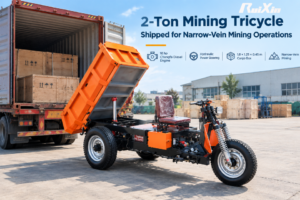
Underground Mining Dump Truck: Gradeability and Ground Clearance
1. What Makes an Underground Mining Dump Truck Suitable for Difficult Roads?
An underground mining dump truck must do more than carry material. In many underground mines, trucks operate on steep ramps, uneven road surfaces, gravel roads and confined tunnels where traction, ground clearance and braking performance directly affect operation.
For difficult underground conditions, the key specifications to evaluate include gradeability, ground clearance, low-speed torque, braking performance, turning capability and chassis strength. These factors should be considered together with the actual road gradient and tunnel conditions before selecting a truck.
2. Why Gradeability Matters in Underground Haulage
Gradeability describes a vehicle’s ability to travel on an inclined road, particularly when carrying a load.
A loaded underground mining dump truck needs sufficient traction and power to climb ramps without excessive speed loss. The required performance depends on:
- Maximum road gradient
- Vehicle load
- Road surface
- Tire condition
- Engine or motor output
- Transmission ratio
- Drive axle configuration
For example, a truck operating on a steep gravel ramp may require different performance from one working mainly on a relatively flat underground roadway.
The rated gradeability of the truck should therefore be compared with the actual maximum gradient of the mine, rather than considered as an isolated catalog number.
3. How to Check the Mine’s Road Gradient
Before selecting an underground mining dump truck, measure the steepest section of the haul road.
The road gradient can be estimated using:
Gradient (%) = Vertical Rise ÷ Horizontal Distance × 100
For example, if the road rises 10 m over a horizontal distance of 100 m:
Gradient = 10 ÷ 100 × 100% = 10%
The same gradient can also be expressed as an angle:
Grade Angle = arctan(Vertical Rise ÷ Horizontal Distance)
This information helps determine whether the truck’s climbing capability is suitable for the mine.
The mine should also consider whether the gradient occurs on a loaded uphill route, loaded downhill route, or both, because braking requirements can be just as important as climbing performance.
4. Why Ground Clearance Is Important
Ground clearance is the distance between the lowest part of the truck and the road surface.
Underground haul roads may contain:
- Rocks
- Ruts
- Drainage channels
- Uneven surfaces
- Large bumps
- Loose material
Insufficient ground clearance can increase the risk of the chassis or other components contacting the road surface.
RUIXIN’s underground dump truck product information specifically highlights the importance of ground clearance for rough mine roads and recommends comparing the vehicle’s minimum clearance with the actual height of bumps or obstacles on the roadway.
For this reason, ground clearance should be checked together with the mine’s actual road conditions rather than treated simply as a vehicle dimension.
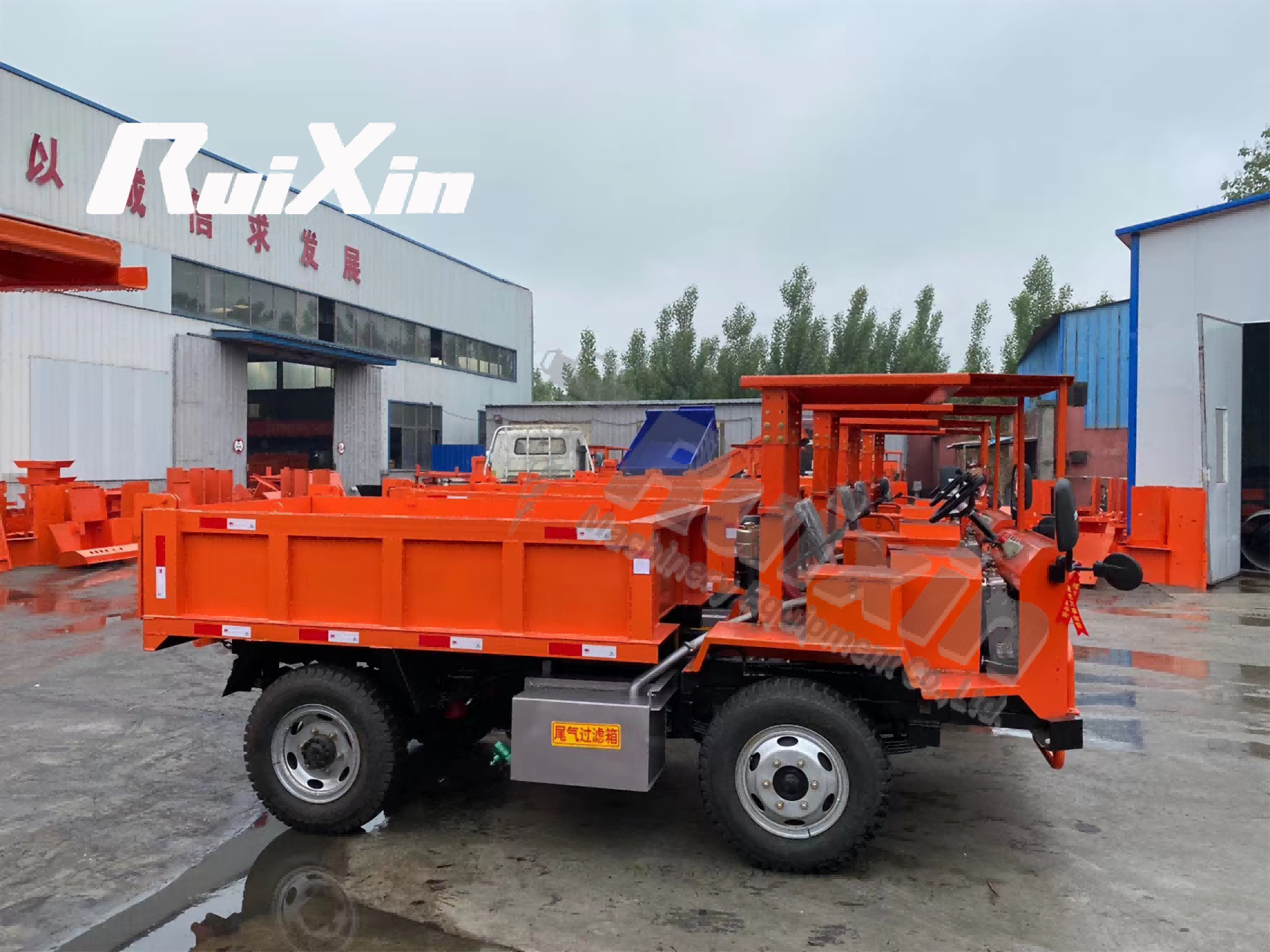
5. Traction: More Than Engine Power
Engine power is important, but it is not the only factor determining whether an underground mining dump truck can climb a difficult road.
Traction is affected by:
Powertrain → Transmission → Drive Axle → Tires → Road Surface
A high-torque powertrain can provide useful low-speed pulling capability, while the transmission determines how effectively that torque is delivered to the wheels.
RUIXIN’s underground dump truck range is designed around low-speed, high-torque operation for mine roads, including steep slopes and rough surfaces.
Tire condition also matters. Worn or unsuitable tires can reduce available traction even when the truck has sufficient engine or motor power.
6. Why Braking Performance Matters on Downhill Roads
Climbing performance is only one part of underground haulage.
When a fully loaded truck travels downhill, the vehicle’s weight increases the demand on the braking system. The truck must be able to control speed consistently without relying excessively on service brakes.
Important considerations include:
- Brake type
- Braking capacity
- Brake response
- Tire condition
- Road gradient
- Vehicle payload
- Downhill distance
For example, RUIXIN’s 12-ton underground mining dump truck uses a wet braking system and is described for underground conditions including wet and muddy downhill sections.
The actual braking configuration should always be evaluated against the mine’s operating conditions and applicable safety requirements.
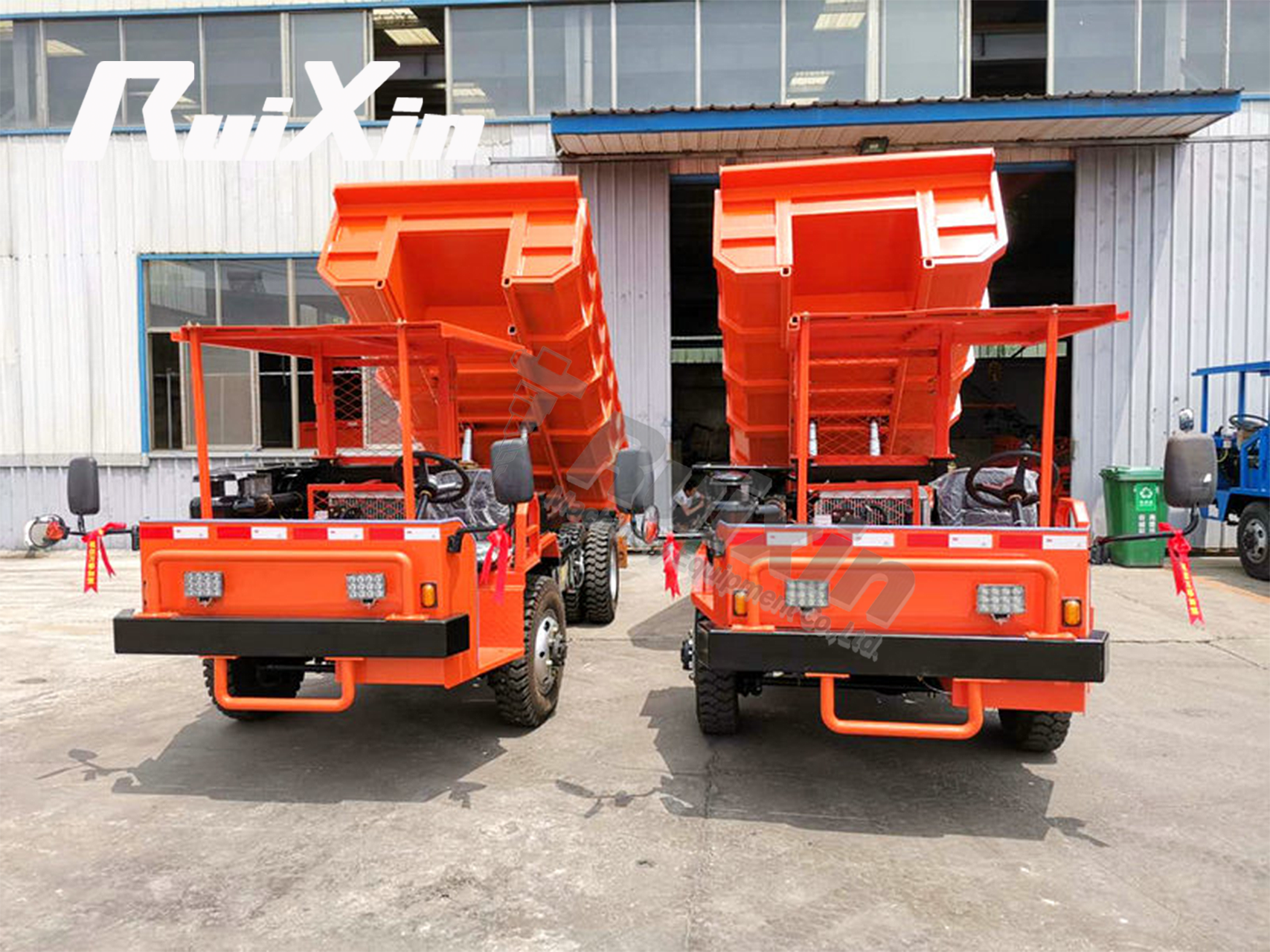
7. How Tunnel Conditions Affect Truck Performance
A truck may have sufficient power and payload capacity but still be unsuitable for a particular underground roadway if its dimensions are not compatible with the tunnel.
Before purchasing an underground mining dump truck, check:
| Mine Condition | What to Check |
|---|---|
| Tunnel width | Vehicle width and passing space |
| Tunnel height | Overall vehicle height |
| Road gradient | Maximum uphill/downhill grade |
| Road surface | Gravel, rock, mud or uneven surface |
| Turning area | Turning radius and available space |
| Road obstacles | Ground clearance |
| Loading area | Space for LHD and truck positioning |
| Dumping area | Clearance and maneuvering space |
RUIXIN’s website recommends providing the tunnel height × width when requesting equipment recommendations.
This information can help the manufacturer evaluate whether the truck dimensions and configuration are appropriate for the working environment.
8. Matching the Dump Truck With the Loading Equipment
The underground dump truck is only one part of the material transportation system.
A typical underground loading and haulage process is:
Ore → LHD Loading → Dump Truck → Haul Road → Dumping Point
The LHD and dump truck should be able to work together without excessive waiting.
For example, if the LHD cannot load the truck efficiently, the truck may spend too much time waiting at the loading point. If the truck cannot leave the loading area efficiently because of restricted roadway conditions, the overall operation can also be affected.
RUIXIN supplies both underground mining dump trucks and LHD loaders, allowing the loading and transportation equipment to be considered as a complete system.
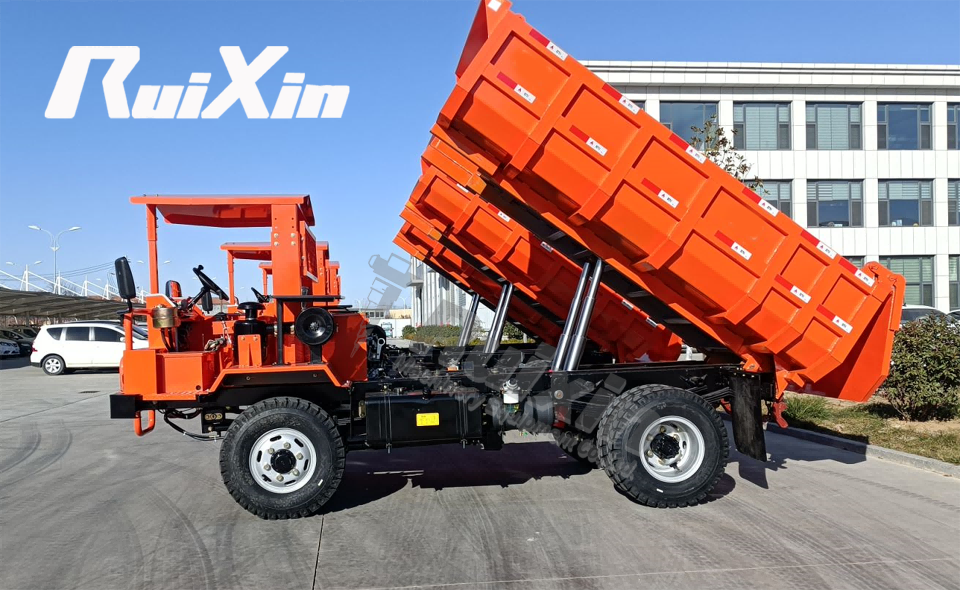
9. Diesel or Electric Power for Difficult Underground Conditions?
Power type should be considered according to the mine environment.
Diesel Underground Mining Dump Truck
Diesel models can be considered when:
- The mine has limited charging infrastructure
- Long operating endurance is required
- The operation is located in a remote area
- Heavy-duty continuous operation is expected
Electric Underground Mining Dump Truck
Electric models can be considered when:
- Charging infrastructure is available
- The haul route is relatively short
- Underground emissions need to be reduced
- Lower-noise operation is preferred
RUIXIN currently offers both diesel and electric underground dump truck series.
10. Common Mistakes When Using Dump Trucks on Steep Mine Roads
Ignoring the Actual Road Gradient
Using a catalog gradeability figure without checking the mine’s actual road conditions can result in an unsuitable configuration.
Checking Ground Clearance Only on Flat Ground
The truck should be evaluated against the real road surface, including bumps, ruts and drainage channels.
Focusing Only on Uphill Performance
A truck must also maintain controlled speed when traveling downhill with a full load.
Ignoring Tire Condition
Tire wear and road surface conditions directly affect available traction.
Selecting Equipment Without Tunnel Measurements
Vehicle width and height should be checked against the actual tunnel before confirming the equipment.
11. What Information Should You Provide Before Ordering?
For an underground mining dump truck project, the following information is useful for equipment evaluation:
- Tunnel width and height
- Maximum road gradient
- Haul distance
- Material type
- Approximate material density
- Required payload
- Road surface conditions
- Loading equipment
- Required operating hours
- Diesel or electric preference
Providing these details allows the truck configuration to be evaluated according to the actual mine conditions instead of relying only on standard specifications.
FAQ
What is gradeability in an underground mining dump truck?
Gradeability refers to the ability of a truck to travel on an inclined road, particularly under loaded operating conditions.
Why is ground clearance important for underground dump trucks?
Ground clearance helps the truck pass over uneven surfaces, rocks, ruts and other obstacles without the chassis or components contacting the road.
Is braking performance important for underground mining dump trucks?
Yes. Braking performance is particularly important when a loaded truck operates on downhill sections or steep underground ramps.
Does engine power determine climbing ability?
Not by itself. Climbing performance also depends on torque, transmission, drive axle, tire traction, vehicle load and road surface.
What tunnel information is needed before selecting a dump truck?
At minimum, provide the tunnel width and height. Road gradient, turning space and surface conditions are also useful for evaluating suitability.
Can electric dump trucks be used underground?
Yes. Electric underground dump trucks can be considered where charging infrastructure and operating conditions are suitable. RUIXIN offers electric underground dump truck models for confined mining environments.
Conclusion
An underground mining dump truck working on steep or rough mine roads needs more than sufficient payload capacity. Gradeability, ground clearance, traction, braking performance and vehicle dimensions all influence whether the truck can operate effectively in the actual underground environment.
Before selecting equipment, measure the tunnel and haul road conditions and provide the maximum gradient, road surface, haul distance and loading requirements. These details allow the truck configuration to be evaluated according to the mine’s real operating conditions.
If you are planning an underground haulage project, send your tunnel dimensions, road gradient, haul distance and material information to RUIXIN for a suitable equipment recommendation.
Technical Review & Update
Technical Review: RUIXIN Mining Equipment Engineering Team
Published: September 29, 2026
Last Updated: September 29, 2026
 English
  Spanish
  Russian