
African Gold Mine: 1-Ton Electric Mining Tricycle for Narrow-Vein Haulage
1. Project Background: Underground Material Transport in an African Gold Mine
Underground gold mining requires transport equipment that can move ore, waste rock, tools, and supplies through confined roadways. In narrow-vein mining operations, limited tunnel space can restrict the use of conventional mining trucks, while installing a rail-based transport system may not be practical for every working area.
For this African mining application, the customer needed a compact solution for routine underground material transportation. The roadway conditions included narrow passages, muddy surfaces, standing water, and varying gradients. These conditions made equipment dimensions, traction, load capacity, and operating safety important considerations during equipment selection.
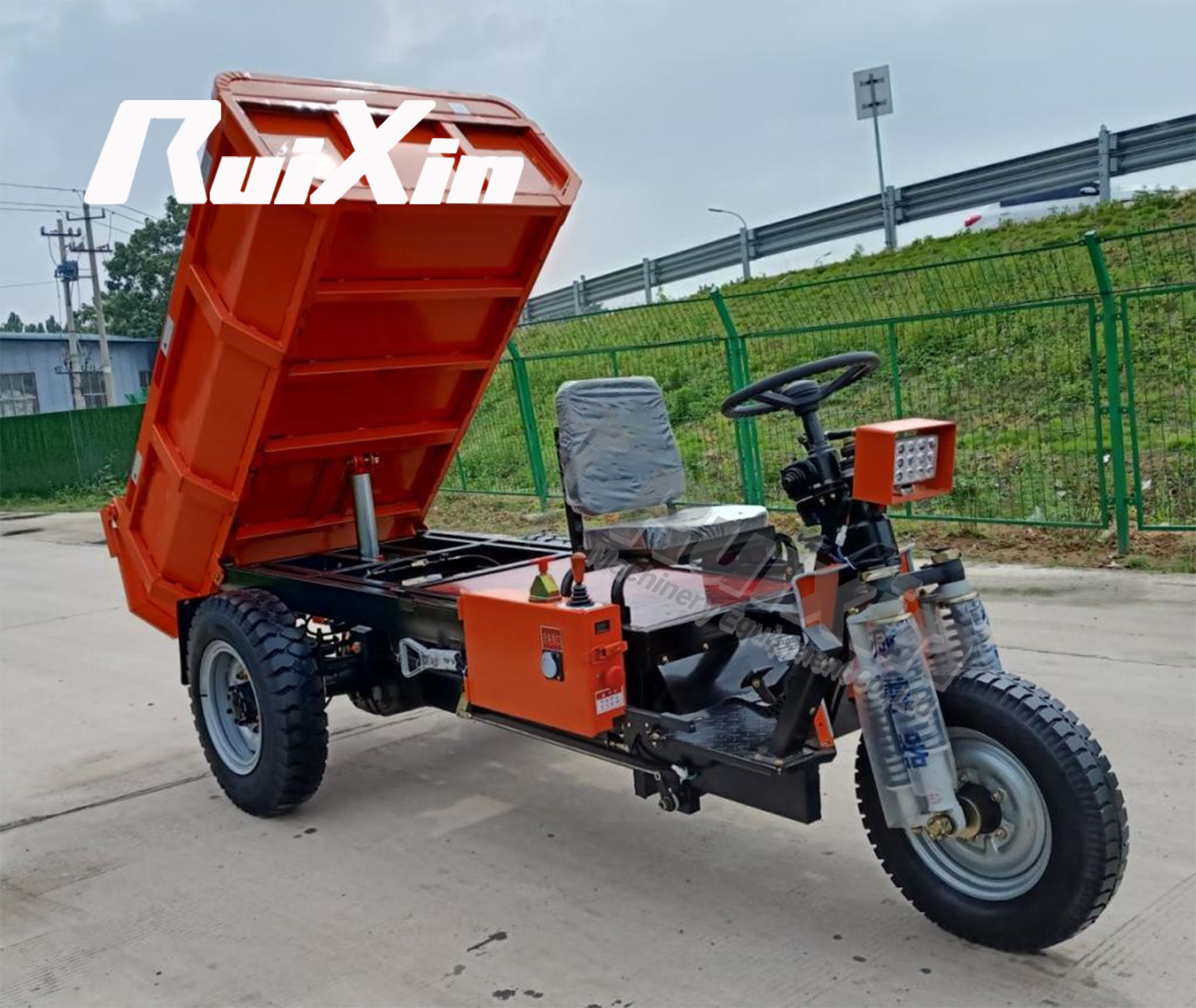
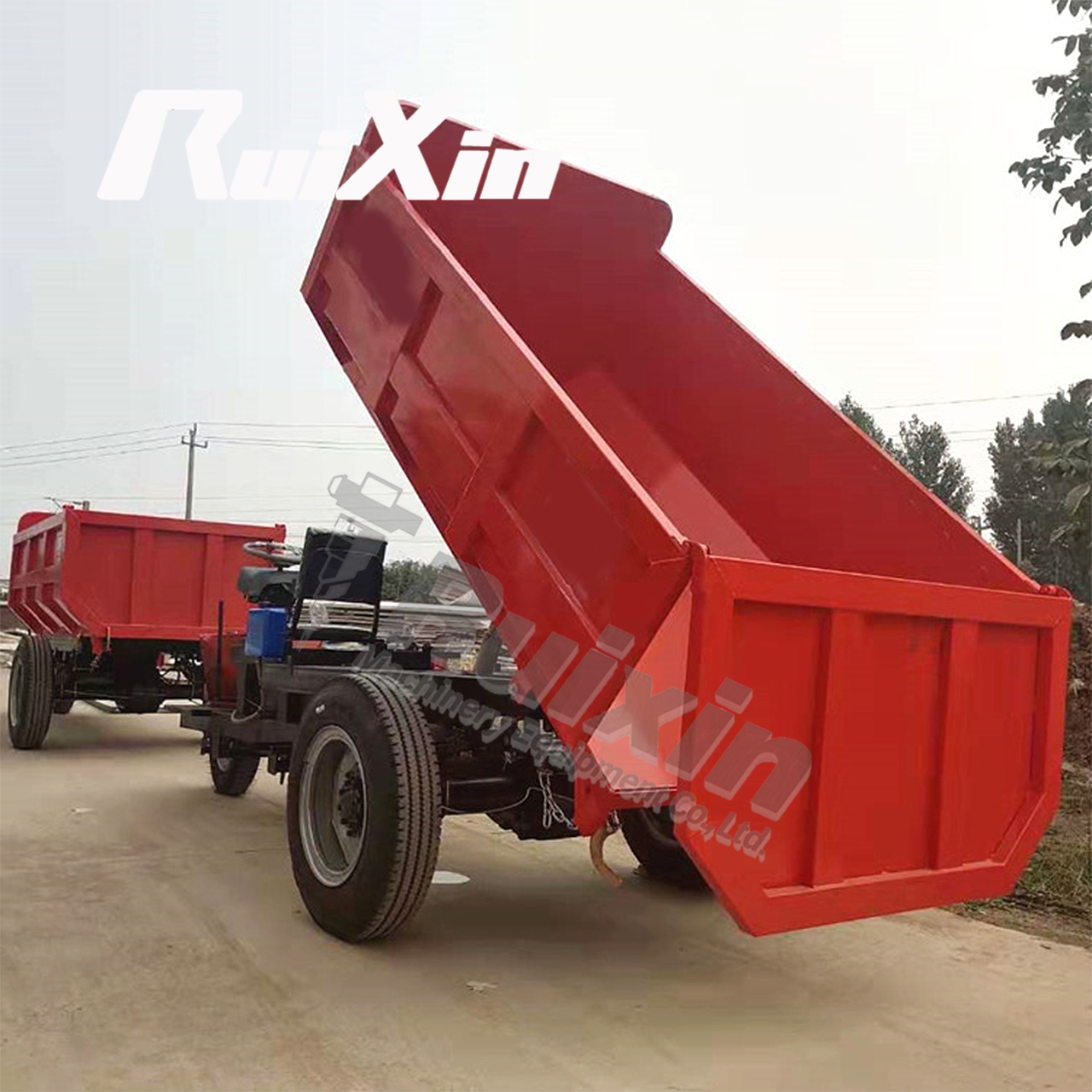
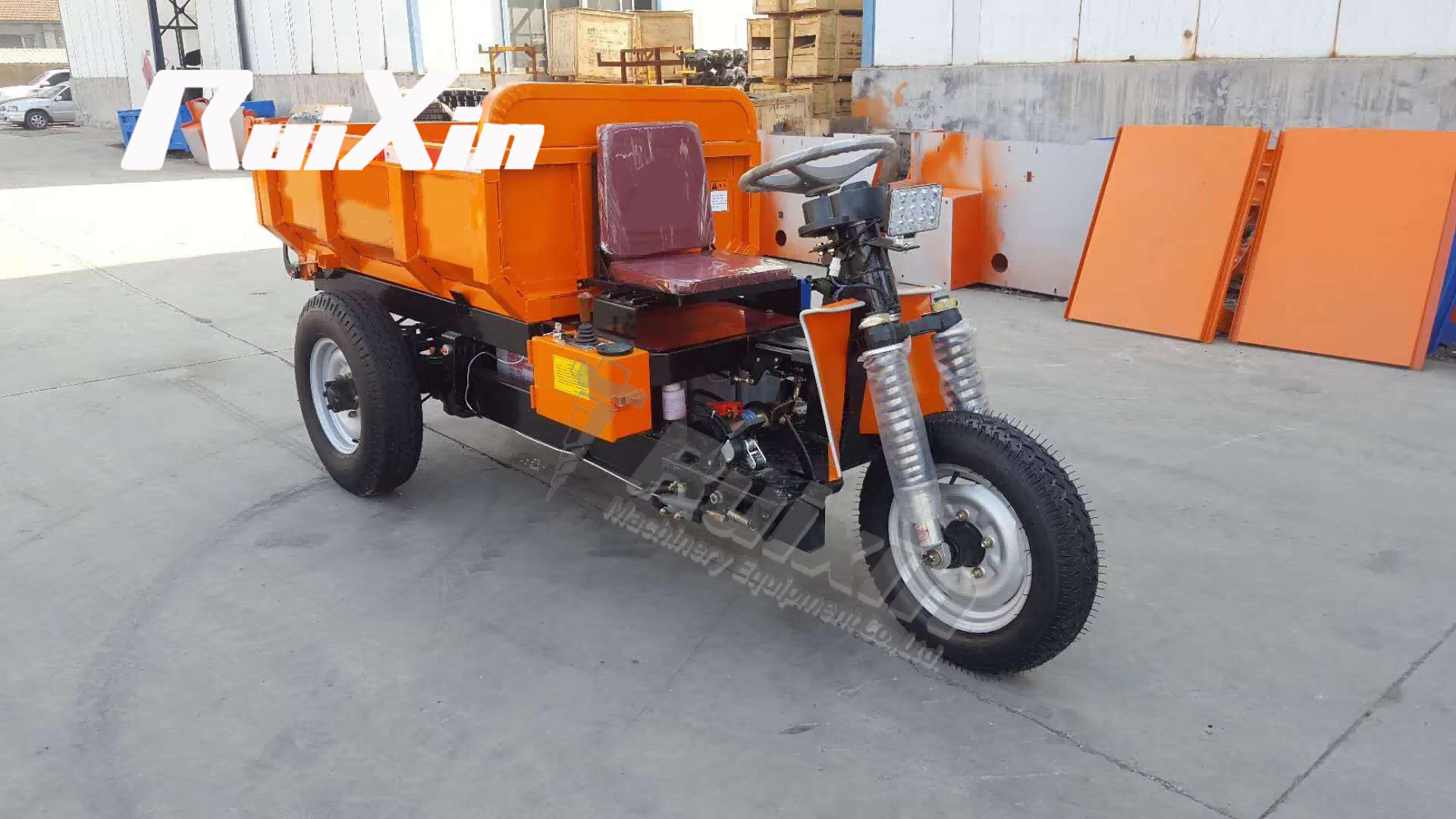
RUIXIN supplied a 1-ton electric mining tricycle for the customer’s underground transport requirements. Its electric drive and compact three-wheel configuration offered an alternative to conventional diesel transport vehicles and fixed rail systems for suitable short-distance haulage tasks.
The project also developed beyond an initial purchase. The customer subsequently placed additional orders to expand the transport fleet, indicating continued procurement demand for this type of equipment within the same mining operation.
The objective was to provide a practical transport option that matched the mine’s roadway restrictions and recurring material-handling requirements without relying on a rail installation.
2. Main Challenges and Operating Requirements
The mining environment presented several considerations for selecting an appropriate underground transport vehicle.
Restricted roadway dimensions
Narrow tunnels and limited turning areas require compact equipment. Overall vehicle width, height, length, and turning clearance must be checked against the actual roadway dimensions.
Wet and uneven road surfaces
Mud, standing water, and uneven ground can affect traction, braking, and vehicle stability. The transport route must be assessed before confirming the operating configuration.
Frequent short-distance transport
Repeated movement of ore, waste material, and mine supplies requires a practical balance between payload, maneuverability, and loading frequency.
Limited suitability of rail transport
Where installing or extending mine railway infrastructure is impractical, a suitable rubber-tired vehicle can provide more flexible movement between designated loading and unloading points.
Operating cost and energy management
An electric mining tricycle eliminates engine exhaust emissions during operation. However, battery capacity, charging arrangements, working hours, and maintenance requirements must be evaluated for the intended duty cycle.
3. Equipment Selection: RUIXIN 1-Ton Electric Mining Tricycle
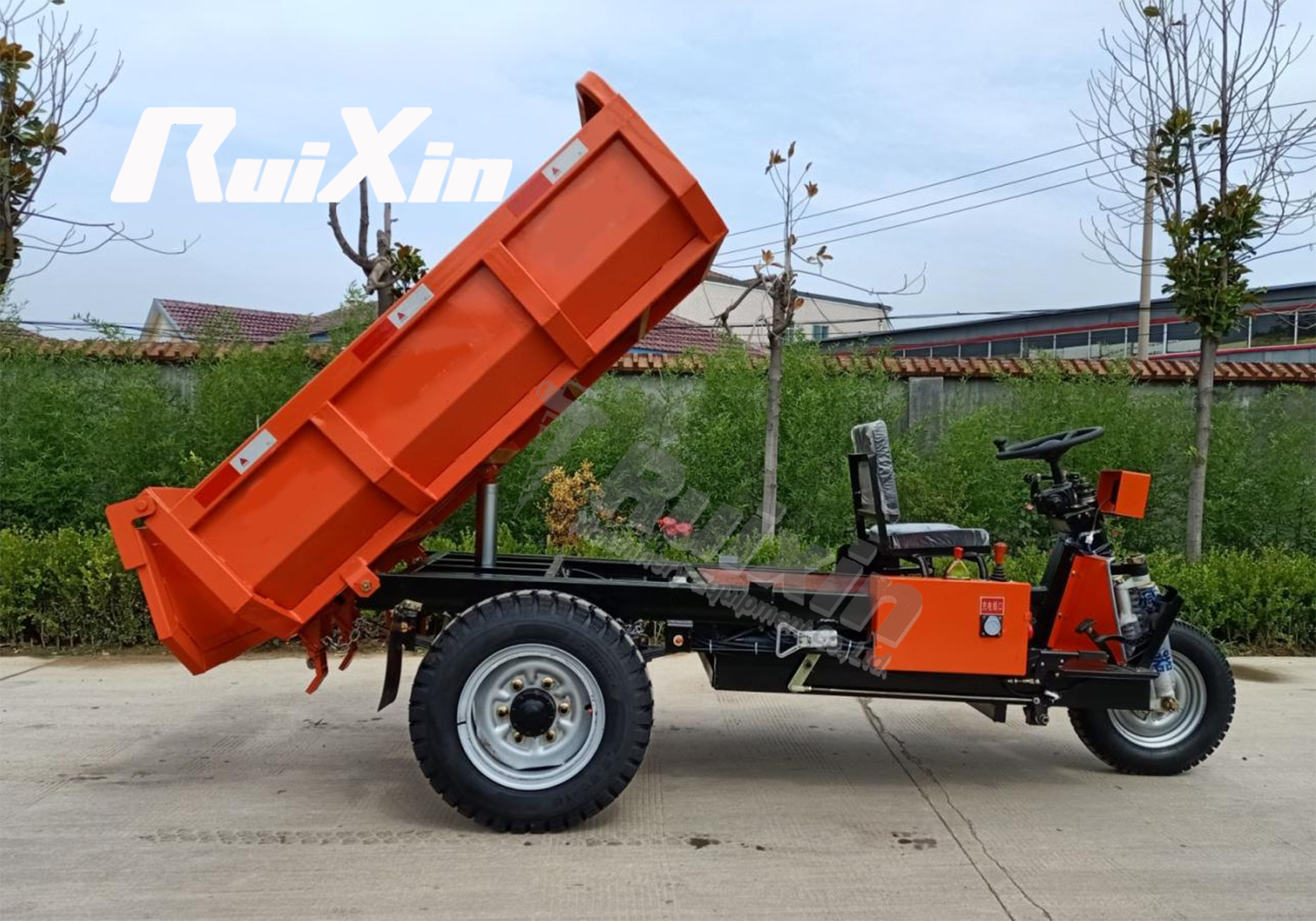
The RUIXIN 1-ton electric mining tricycle was selected as the reference configuration for this application.
Key Technical Specifications
| Parameter | Specification |
|---|---|
| Equipment type | Electric mining tricycle |
| Rated load capacity | 1,000 kg |
| Drive system | Electric motor |
| Motor power | 3 kW AC motor |
| Battery | 6 × 12 V maintenance-free lead-acid batteries |
| Overall dimensions | 3,100 × 1,250 × 1,200 mm |
| Cargo box dimensions | 1,600 × 1,000 × 400 mm |
| Main application | Underground material transportation |
Specifications are based on RUIXIN’s published equipment information. Confirm the final configuration before ordering.
Why Choose an Electric Mining Tricycle?
1. Compact dimensions for restricted underground routes
With an overall width of 1,250 mm, the listed configuration provides a reference for mines evaluating transport equipment for narrow roadways. Actual suitability depends on the narrowest passage, turning geometry, overhead clearance, and required safety margins.
2. A 1-ton payload for routine material movement
The rated load capacity of 1,000 kg provides a practical reference for transporting smaller batches of ore, waste rock, tools, and supplies. The actual load per trip should account for material density, road conditions, and safe operating limits.
3. Electric drive for confined working environments
Battery-powered operation avoids engine exhaust emissions at the point of use and can reduce operating noise compared with a comparable diesel vehicle. These characteristics can be valuable in underground environments, although adequate mine ventilation and compliance with site safety requirements remain essential.
4. Flexible transport without a fixed rail system
A three-wheel, rubber-tired vehicle can support point-to-point transportation on suitable mine roadways. This approach may be appropriate where rail installation is unsuitable or where flexible access between working areas is required.
5. Fleet expansion based on recurring demand
The customer’s repeat purchases provide a practical indication of continued equipment procurement for the same mining application. Expanding a fleet can help distribute routine transport tasks, but the required fleet size should be determined by daily material volume, route length, cycle time, and vehicle availability.
For detailed specifications, visit the RUIXIN 1-Ton Electric Mining Tricycle.
4. Delivery, Technical Support and Implementation
For overseas mining projects, equipment delivery is only one part of the purchasing process. Customers also need to consider spare parts availability, maintenance arrangements, and technical assistance after the machinery reaches the mine.
RUIXIN’s implementation process focuses on equipment inspection, delivery preparation, and ongoing technical support.
Stage 1: Working-condition assessment
Confirm roadway width and height, turning areas, route length, surface conditions, gradients, and the material to be transported. Establish the expected payload per trip and daily transport target.
Stage 2: Technical configuration
Review the rated payload, overall dimensions, motor configuration, battery arrangement, charging requirements, braking system, and compatibility with the mine’s operating conditions. Particular attention should be given to wet surfaces and sloped sections.
Stage 3: Factory inspection and delivery preparation
Before dispatch, inspect the agreed equipment configuration and relevant operating systems. Verify the electric drive, steering, braking, cargo box, and other fitted components. Prepare the equipment for transport according to the confirmed shipping requirements.
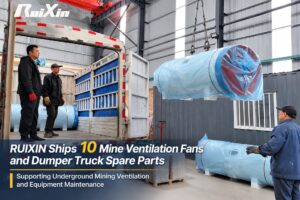
Stage 4: Spare Parts Preparation and Remote Technical Support
For customers operating in remote African mining areas, waiting for replacement parts or arranging on-site maintenance can result in unnecessary equipment downtime.
To reduce these concerns, RUIXIN provides wear-part spare parts packages and remote video repair guidance. Common replacement parts can be prepared according to the equipment configuration and customer requirements. If an operating problem occurs, customers can communicate with the technical team through video to help identify the issue and receive troubleshooting guidance.
This support arrangement helps overseas customers prepare for routine maintenance and handle common equipment problems without relying entirely on an immediate on-site service visit.
Stage 5: Site Inspection and Commissioning
After arrival, check the vehicle against the actual roadway conditions. Conduct controlled operating tests, verify braking and maneuverability, and provide operating guidance as required.
Stage 6: Performance Monitoring and Fleet Planning
Record trip frequency, average payload, transport cycle time, charging intervals, operating hours, and maintenance requirements. Use these records to determine whether additional vehicles are needed to meet the mine’s transport demand.
5. Application Results and Operational Evaluation
The documented outcome of this project is the customer’s repeat procurement of RUIXIN 1-ton electric mining tricycles to expand its underground transport fleet.
This provides a concrete purchasing outcome, although it does not independently establish a specific percentage improvement in productivity or a reduction in operating costs.
For a more detailed evaluation, the mine can track the following indicators:
| Performance Indicator | Evaluation Method |
|---|---|
| Daily transport volume | Actual payload per trip × completed trips |
| Transport cycle time | Loading + loaded travel + unloading + return |
| Equipment availability | Operating hours compared with scheduled hours |
| Energy consumption | Electricity used per operating shift or transported tonne |
| Maintenance requirements | Maintenance frequency, downtime, and spare parts used |
| Fleet utilization | Completed trips and operating hours per vehicle |
For example, if the vehicle carries an average of 800 kg per trip and completes 15 trips in a working day, the calculated daily transport volume is:
0.8 tonnes × 15 trips = 12 tonnes per day.
This is an illustrative calculation, not a measured result from the customer’s mine. Actual performance will depend on route length, loading arrangements, ground conditions, operating hours, and charging requirements.
One additional consideration is gradient capability. RUIXIN lists a fully loaded climbing capability of no more than 6° for this 1-ton electric tricycle. If a mine contains steeper sections, the manufacturer should confirm suitability based on the actual configuration, load, traction, and braking requirements before deployment.
6. Key Takeaways for Similar Mining Projects
This African gold mine application highlights several factors to consider when selecting underground mining transport equipment:
Match vehicle dimensions to the narrowest roadway and turning area.
Select payload capacity according to material volume and required trip frequency.
Evaluate road gradients, mud, standing water, traction, and braking performance.
Confirm battery capacity, charging access, and operating duration for electric vehicles.
Prepare commonly used spare parts to reduce maintenance delays.
Arrange remote technical support for troubleshooting and routine maintenance.
Monitor actual transport performance before deciding how many vehicles are needed.
For overseas mining customers, reliable equipment is important, but access to spare parts and technical assistance also matters. RUIXIN supports customers with equipment-specific spare parts packages and remote video repair guidance, helping them manage maintenance challenges in locations where on-site service may not be immediately available.
RUIXIN supplies electric and diesel mining tricycles, underground mining dump trucks, and underground mining loaders for different material-handling requirements. The most suitable option depends on the mine’s layout, transport distance, payload target, and working conditions.
Explore the RUIXIN Mining Tricycle Series or compare available underground mining transport equipment for alternative haulage requirements.
7. Case Study Keywords and Internal Links
The following keywords are arranged according to their relevance to this project and linked to corresponding RUIXIN website pages.
8. Discuss Your Mining Transport Requirements
Planning to improve material transportation in a narrow underground mine?
Send RUIXIN your roadway dimensions, maximum gradient, transport distance, required payload, daily output target, and available charging facilities. Our team can help evaluate a suitable mining tricycle or underground mining dump truck configuration for your project.
Contact RUIXIN for equipment selection, spare parts planning, and technical support for your mining project.
Technical Review: RUIXIN EQUIPMENT Engineering Team
Published: November 6, 2026
Last Updated: November 6, 2026
 English
 Spanish
 Russian