Mastering Narrow Vein Mining: How Synergizing Mucking loader and Dump Trucks Doubles Efficiency in South African Mines
In South Africa—from the historic gold mines of the Witwatersrand Basin to the platinum-rich seams of the Bushveld Complex—narrow vein and small heading mining remain the technical heartbeat of the industry. As mining depths increase, managing ground pressure becomes critical. Maintaining a small tunnel profile is not just about reducing development costs; it is a vital safety measure to ensure rock mass stability.
However, confined spaces pose a massive challenge for ore removal (mucking). Traditional Load-Haul-Dump (LHD) loaders are often too bulky to enter, and manual loading is far too slow. How can the strategic pairing of Mucking Machines and Mining Dump Trucks break this bottleneck? Below is a deep dive into maximizing efficiency based on South African mining practices.
1. Equipment Selection: “Size Management” and Performance Matching
In tunnels less than 3 meters wide and 2.5 meters high, equipment selection must follow the principle of “maximizing space utility.”
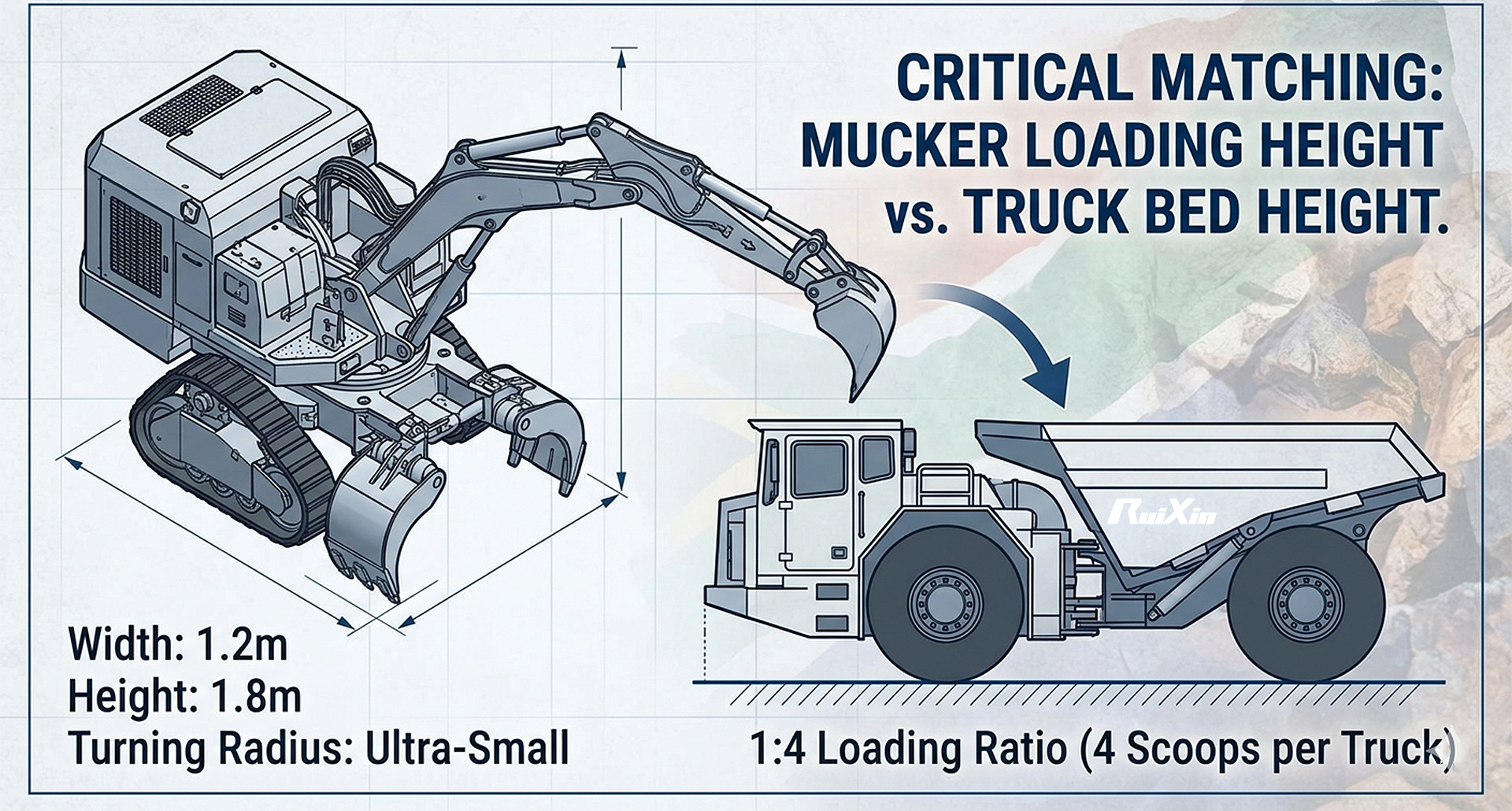
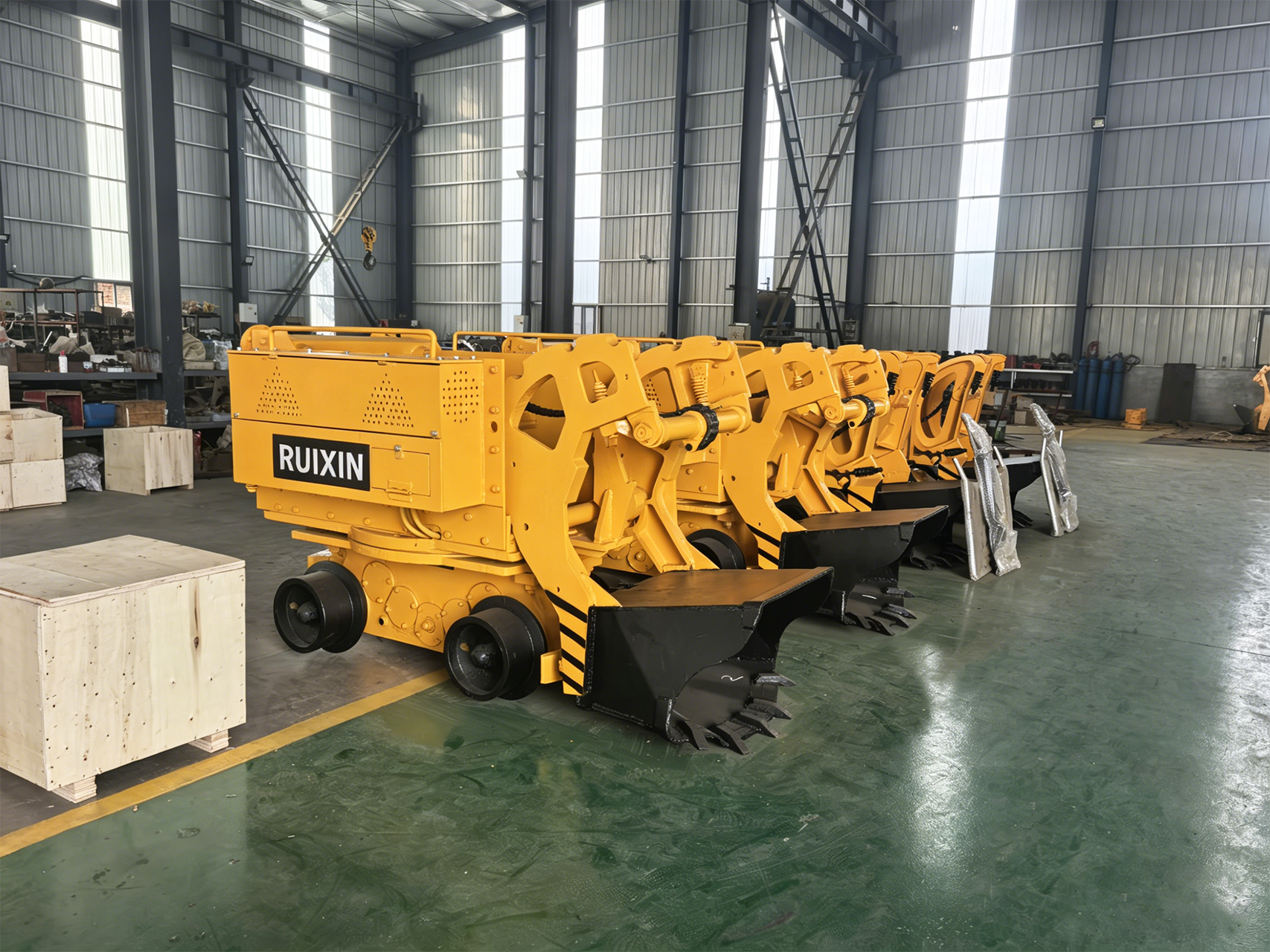
Compact Mucking Machines: Priority should be given to crab-claw or side-dumping mucking machines with an ultra-small turning radius and high breakout force. Given the high temperatures and hard rock conditions in South African deep-level mines, the cooling system and hydraulic stability are paramount for continuous operation.
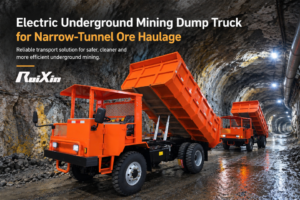
Mining Dump Trucks: These must be paired with narrow-body trucks (such as 5-10 ton tri-wheel or four-wheel drive mining units) specifically designed for small headings. A critical parameter is the loading height—the truck bed must be low enough for the mucker to discharge comfortably, yet the capacity should maintain a 1:3 to 1:5 ratio with the mucker’s bucket. Ideally, 3 to 5 scoops should fill a truck, minimizing cycle wait times.
2. Seamless Integration: The “Zero-Wait” Loading Chain
True efficiency is not found in the speed of a single machine, but in the continuity of the entire workflow.
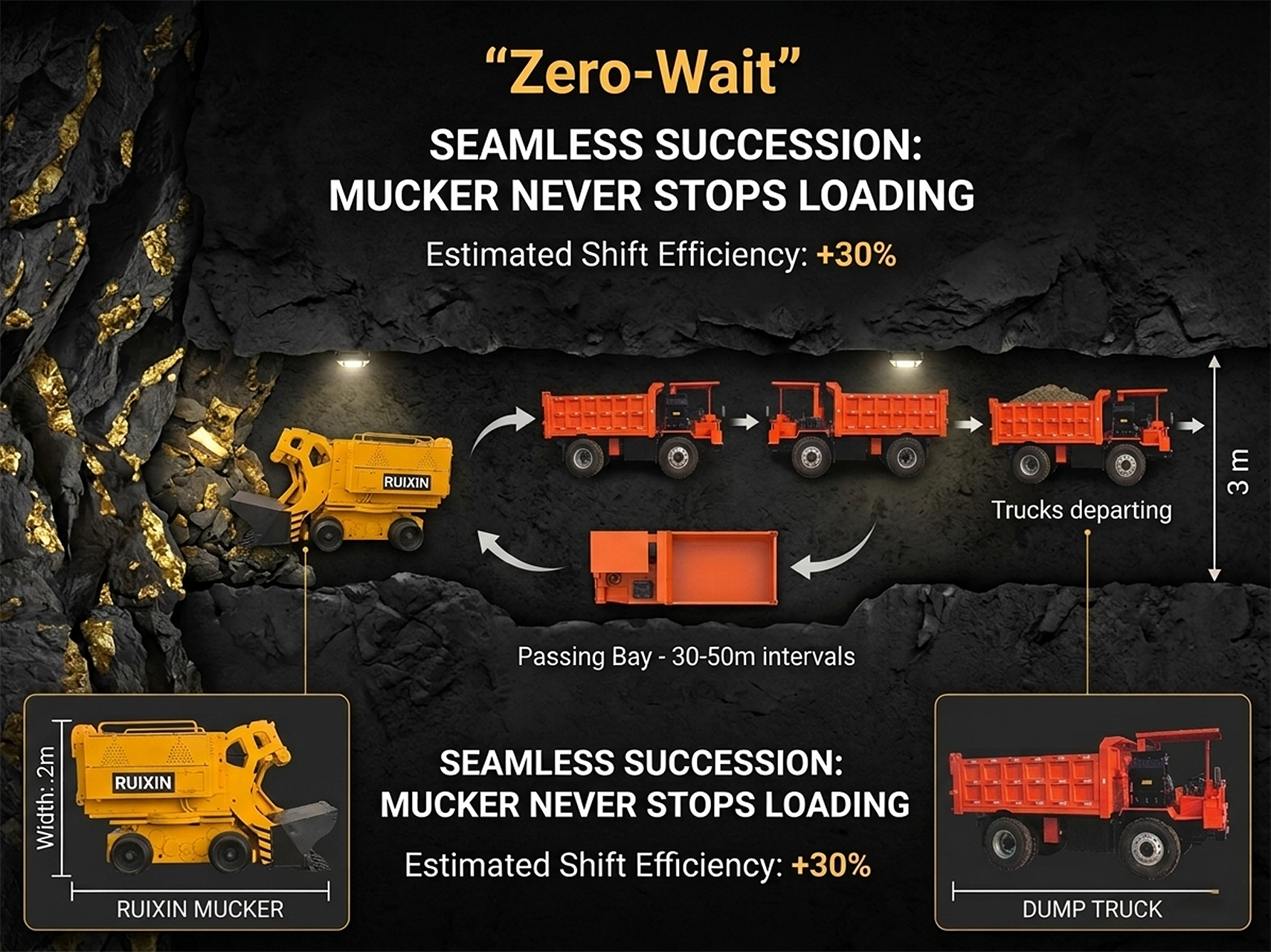
Dynamic Passing Bay Layout: South African mines often utilize a combination of cross-cuts and strike drives. We recommend establishing temporary passing bays or small alcoves every 30–50 meters. This enables a “full car out, empty car in” cycle, ensuring the mucking machine continues loading at the face while trucks form a continuous conveyor-like line.
Synchronized Succession Method: When the first truck is 80% full, the second truck should already be stationed at the nearest passing bay. The moment the full truck departs, the next one reverses into position. Field data suggests this seamless transition can boost shift efficiency by over 30%.
3. Localized Optimization for the South African Environment
South African mines present some of the most unique challenges globally, requiring specific adaptations:
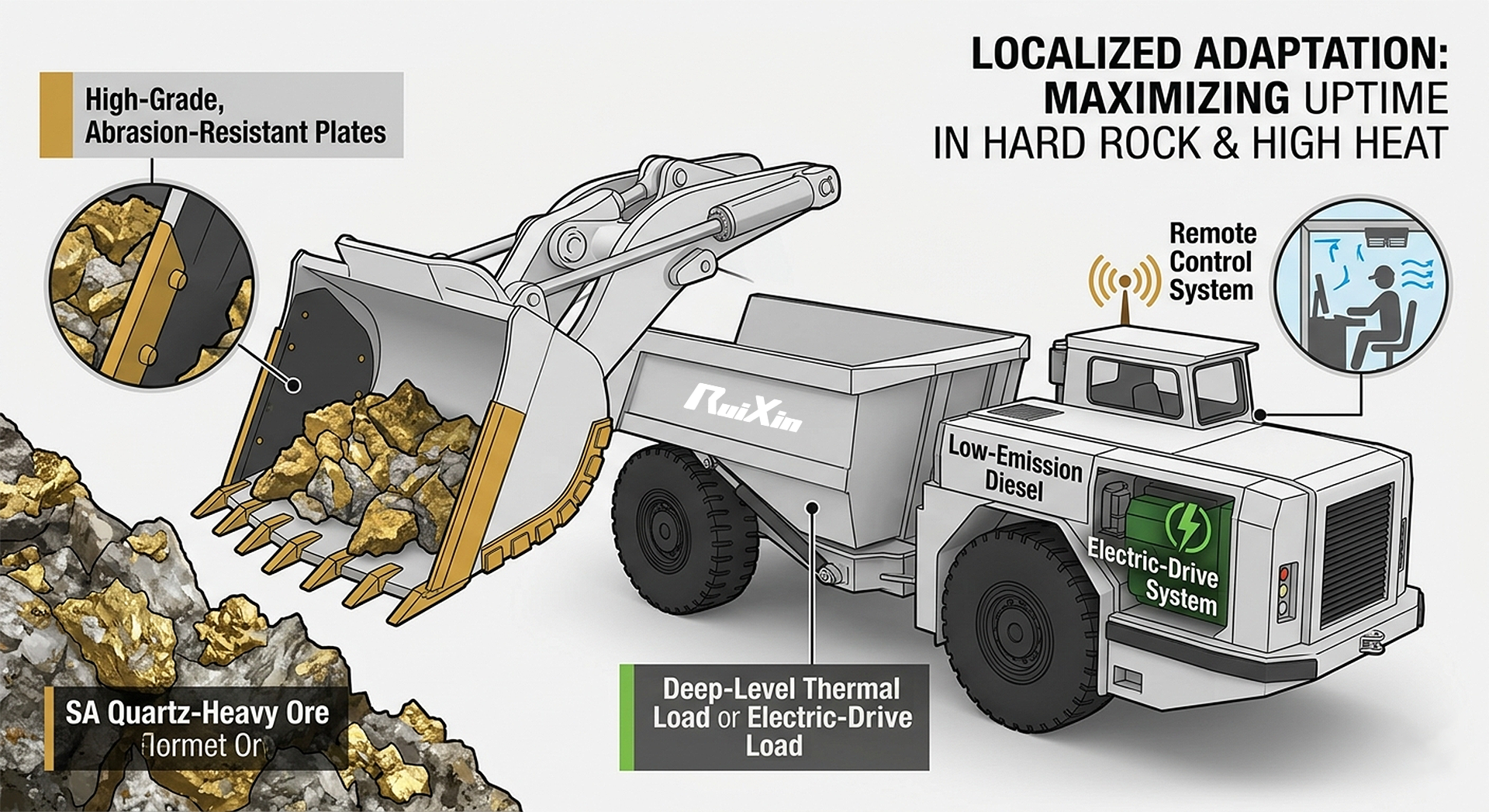
Hard Rock Wear Management: The quartz-heavy gold ore in South Africa is extremely abrasive. Critical contact points—such as mucker bucket teeth and truck bed liners—must be fitted with high-grade, abrasion-resistant plates. Utilizing modular designs allows for “in-tunnel” replacement of wear parts, avoiding the need to transport equipment back to the surface for minor repairs.
The Shift Toward Automation: The industry is transitioning from labor-intensive to technology-driven operations. Implementing Remote Control mucking machines is the new standard. By allowing operators to stand in a safe, well-ventilated area, you not only reduce accident rates but also capture real-time data on tons per hour.
Power System Considerations: Ventilation costs in deep mines are staggering. In small headings, the adoption of electric-drive or low-emission diesel combinations significantly reduces the thermal load and exhaust fumes, indirectly increasing worker endurance and equipment uptime.
4. Conclusion
In South Africa’s competitive mining landscape, the cost per ton determines a mine’s survival. Narrow vein mucking is no longer synonymous with “slow pace.” Through rigorous control of equipment dimensions, scientific matching of load ratios, and lean management of haulage flows, small heading mines can achieve industrial-scale output.
Our Commitment: We provide the most rugged and intelligent underground hauling solutions tailored for South African and global clients. Whether you are operating in deep-level gold or complex platinum reefs, we can map out a customized efficiency roadmap for your operation.
Contact Us: Visit our website to view technical specifications for our small-heading equipment or book a site survey with our technical experts.

 English
  Spanish
  Russian