
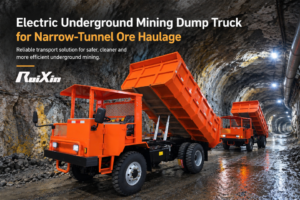
A Complete Guide to Small Mining Dump Trucks: Structural Features and Operational Applications
The small mining dump truck is a core piece of equipment for short-distance, narrow-space transportation in mines, featuring flexible adaptability, rugged durability and easy operation. Exclusively designed for scenarios where large mining trucks are inaccessible—such as underground mine roadways, open-pit mine edges and small quarries—it is primarily responsible for the short-distance transfer of muck, ore and infrastructure materials, acting as the capillary vessels for material circulation in mines. This article provides an in-depth analysis from three core aspects: structural characteristics, operational applications and selection adaptation.
I. Core Structural Characteristics: Full-Dimensional Adaptation to Severe Mining Working Conditions
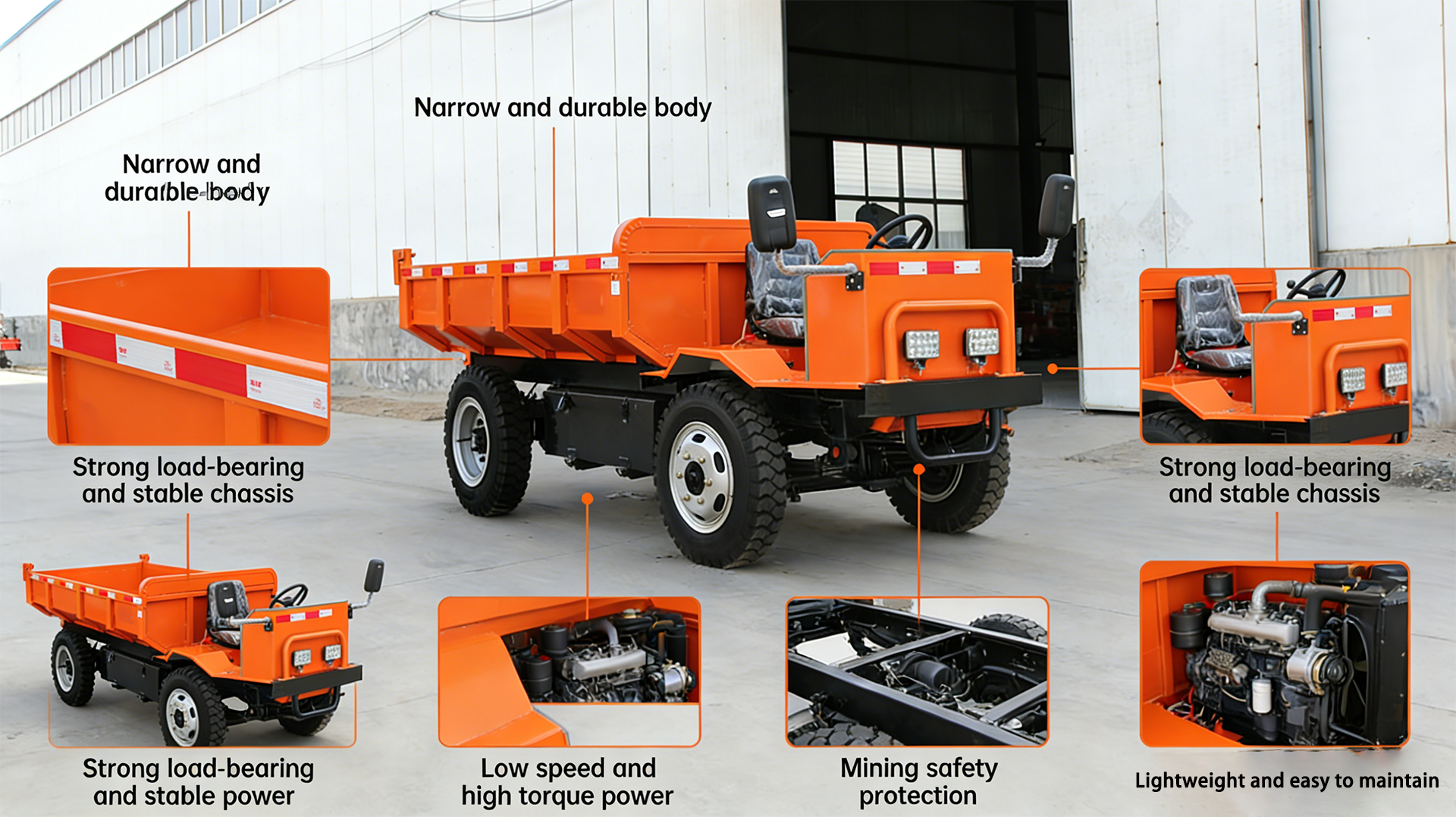
The structure of small mining dump trucks undergoes mining-specific reinforcement, differing fundamentally from ordinary engineering dump trucks. The design centers on narrow body, heavy load, stable travel and easy maintenance, with a focus on five core modules:
Narrow, Rugged Body
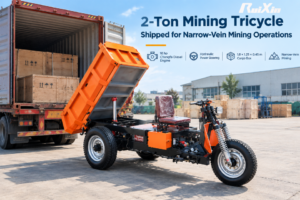
With a width of 1.2-2.2m and a turning radius of 3-5m, it easily passes through narrow roadways. The cargo box is made of 8-12mm thickened wear-resistant steel plates with reinforced edges and corners to resist ore impact and abrasion. The rear-tilting hydraulic unloading angle is ≥45°, and a dustproof and sealed design prevents hydraulic system failures.
Heavy-Load, Stable Chassis
The integral welded frame offers a 30% plus improvement in bending and torsion resistance. Equipped with mining solid tires or thickened herringbone pattern vacuum tires, four-wheel drive models feature wheel-side reduction axles, with a maximum climbing capacity of 20°-35°. The reinforced leaf spring suspension cushions bumps and jolts, adapting to gravel and muddy unpaved roads.
Low-Speed, High-Torque Power
Mainstream 15-50kW diesel engines deliver high torque at low speeds and low fuel consumption, suitable for short-distance, low-speed heavy-load operations. Lithium battery new energy models are optional for closed underground scenarios, featuring zero exhaust and low noise. The transmission system is mainly manual or hydraulic automatic, with wet clutches for wear resistance and smooth gear shifting.
Mining Safety Protection
Standard configuration includes a simple open or semi-enclosed cab with a wide field of vision and intuitive operation; some models are equipped with Roll-Over Protection Structure (ROPS) and Falling Object Protection Structure (FOPS), complying with mining safety standards. All vehicle electrical components are waterproof and dustproof, and simple fault indicator lights enable quick on-site troubleshooting.
Lightweight & Easy Maintenance
With a total vehicle weight of 1-5t and a load capacity of 1-8t, it exerts low ground pressure and requires no ground reinforcement for operation sites. Core components adopt a modular layout, allowing simple maintenance to be completed on-site, and spare parts are easily procured, reducing operational costs.
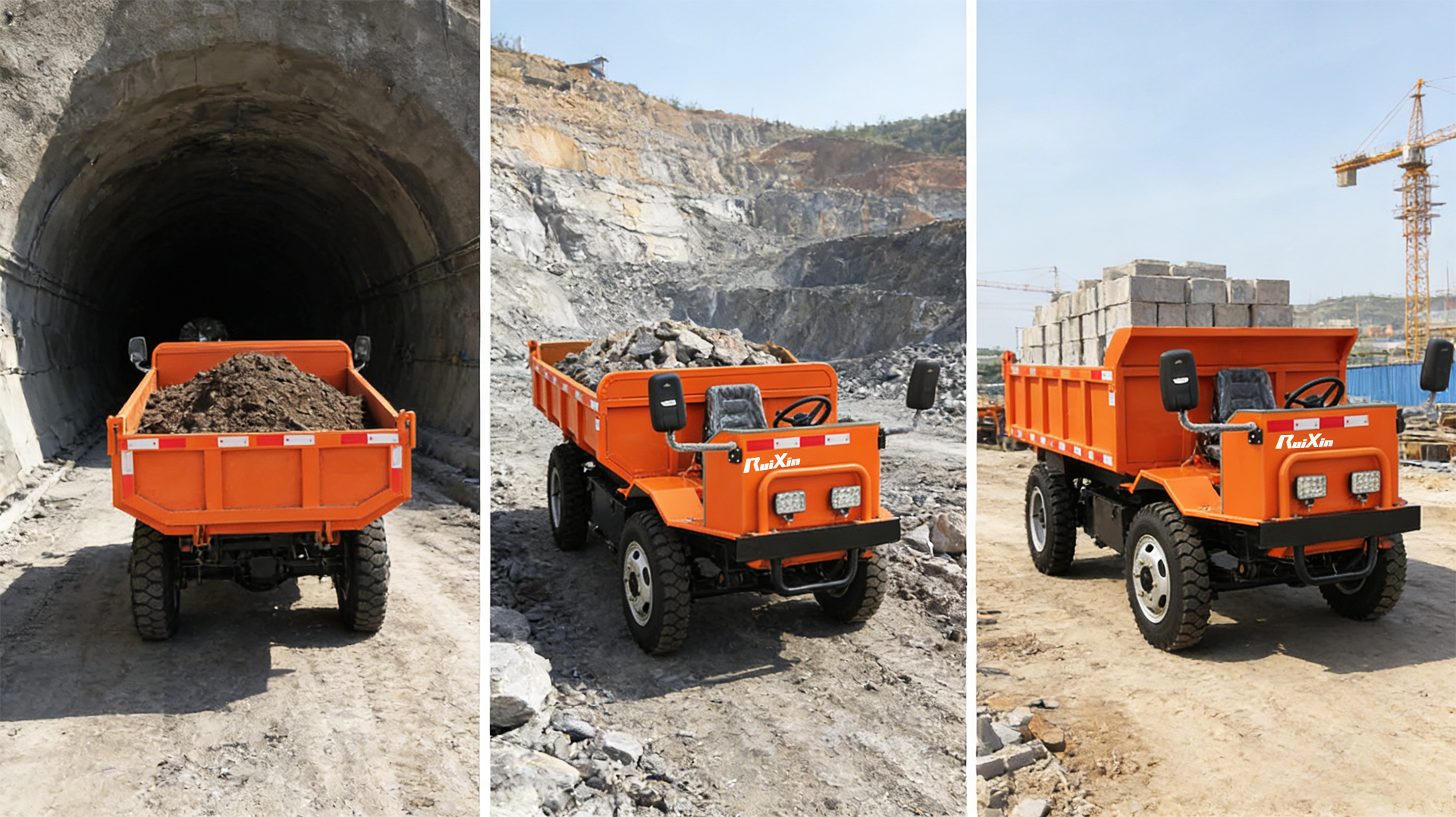
II. Core Operational Applications: Compensating for the Scenario Shortcomings of Large Mining Trucks
Focusing on short-distance, high-frequency, narrow-space material transfer, it covers all mine scenarios and can be extended to small-scale engineering fields. Its core application scenarios are as follows:
- Underground Mines: A core equipment for the short-distance transfer of tunneling muck and underground ore. The narrow-body design adapts to roadway passage; lithium battery models produce no exhaust, reducing underground ventilation costs, and replacing manual carting to significantly improve efficiency.
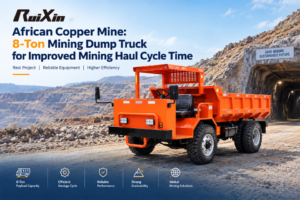
- Open-Pit Mines/Quarries: Responsible for the recovery of leftover materials in the main mining area and the short-distance transfer of on-site ore to crushing/screening stations. It solves the problem of large mining trucks being inaccessible and uneconomical, realizing full material recovery.
- Mine Infrastructure Construction: Transports infrastructure materials such as sand, cement and anchor bolts, as well as renovation muck during site leveling and roadway renovation. It is a multi-purpose vehicle that replaces a variety of small transport equipment, reducing equipment investment.
- Derived Scenarios: Adapts to on-site material transfer in sand and gravel yards and mixing stations, as well as muck and sand transfer in rural road construction and farmland water conservancy infrastructure, suiting narrow roads and field unpaved roads.
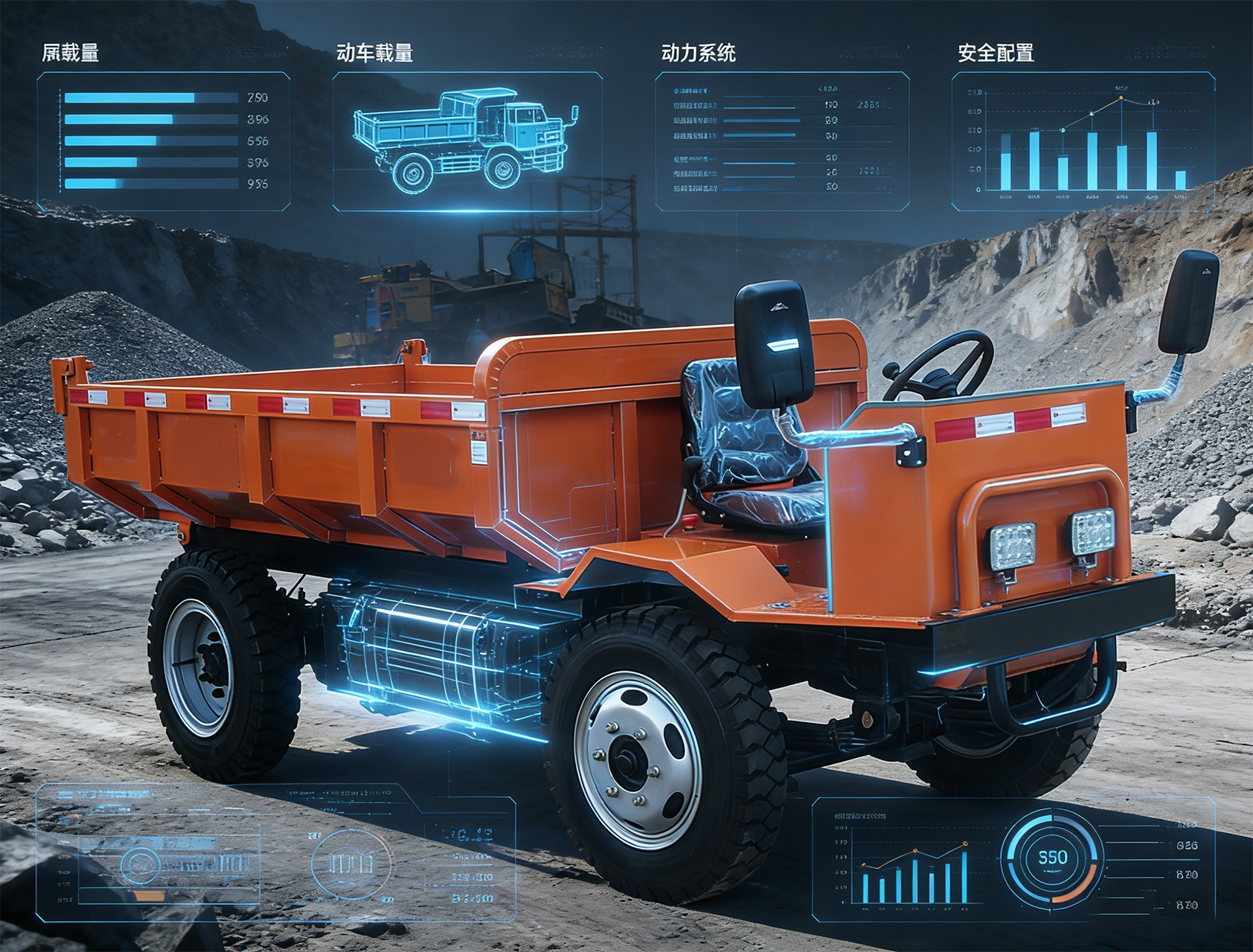
III. Core Adaptation of Structure and Operation: Efficient Selection Based on Demand
Structural characteristics are highly bound to operational scenarios, with the core selection principle of matching working conditions and avoiding waste. Four core selection directions are proposed:
- Underground Operations: Select narrow-body models with a width ≤1.8m; prioritize lithium battery new energy or low-emission diesel models with ROPS and rear-tilting unloading function.
- Open-Pit Mines/Quarries: Select four-wheel drive models with a large load capacity of 5-8t, equipped with thickened cargo boxes and mining solid tires to enhance wear and puncture resistance.
- Short-Distance High-Frequency Transfer: Select hydraulic automatic transmission paired with a high-torque engine to reduce operational intensity and improve transfer efficiency.
- Small Mines/Low Budget: Select single-cylinder or twin-cylinder diesel models with a modular design for low procurement costs and convenient maintenance.
The core competitiveness of small mining dump trucks lies in their compact yet sophisticated, small yet powerful design. Structurally, they are fully adapted to harsh mining environments; in application, they cover the scenario blind spots of large mining trucks. They not only improve the overall transportation efficiency of mines but also reduce equipment investment and operational costs for small mines, making them a must-have transport equipment for underground mines, small open-pit mines, quarries and other scenarios.
 English
  Spanish
  Russian