
Mining Dump Truck Tire Selection for Underground Mines
Mining dump truck tires directly affect traction, load capacity, driving stability, and maintenance costs in underground mining operations. Choosing suitable tires requires considering the truck’s payload, axle configuration, road conditions, and tire construction. Underground mine roads often contain sharp rocks, loose gravel, wet surfaces, and steep sections, placing additional demands on tire performance. This article explains the key factors to consider when selecting mining dump truck tires and compares actual tire configurations used on different RUIXIN underground mining dump trucks.
1. Why Tire Selection Matters in Underground Mining
Underground mining trucks operate under demanding conditions. Uneven road surfaces, heavy loads, and repeated transportation cycles can accelerate tire wear and increase the risk of damage.
Suitable tires help improve:
Load-bearing capacity: Support the vehicle’s operating weight and payload.
Traction: Maintain grip on rough, loose, and wet mine roads.
Durability: Resist cuts, impacts, and premature tread wear.
Driving stability: Support reliable steering and vehicle balance.
Maintenance efficiency: Reduce unnecessary tire replacement and downtime.
Tire selection should always match the truck’s original design and actual operating conditions.
2. Five Factors to Consider When Choosing Mining Dump Truck Tires
2.1 Load Capacity
Tires must support the truck’s total operating weight, including its payload. Buyers should check the front and rear axle loads, tire load ratings, and number of tires installed on each axle.
Do not select tires based only on the truck’s rated payload. Actual axle load distribution is equally important.
2.2 Tire Size and Compatibility
Tire dimensions affect ground clearance, vehicle height, steering clearance, and overall stability.
Before purchasing replacement tires, confirm:
Original tire size and rim dimensions
Tire diameter and width
Front and rear axle configuration
Clearance around the wheels and chassis
Manufacturer-approved replacement specifications
For mines with narrow tunnels or low ceilings, maintaining the original vehicle dimensions is particularly important.
2.3 Traction and Road Conditions
Different underground road surfaces require different tire characteristics.
| Road Condition | Main Requirement |
|---|---|
| Hard rock roads | Abrasion resistance |
| Loose gravel | Reliable traction |
| Wet roadways | Stable ground contact |
| Uneven surfaces | Impact resistance |
| Inclined passages | Consistent traction |
Consider the most demanding road conditions when selecting tires rather than evaluating only smooth sections of the haulage route.
2.4 Tire Construction
Radial and steel wire tires are among the configurations used in mining vehicles.
When comparing options, examine sidewall strength, tread durability, resistance to cuts, and suitability for the specified load and speed.
The final choice should follow the original vehicle specifications and tire manufacturer’s recommendations.
2.5 Front and Rear Tire Configuration
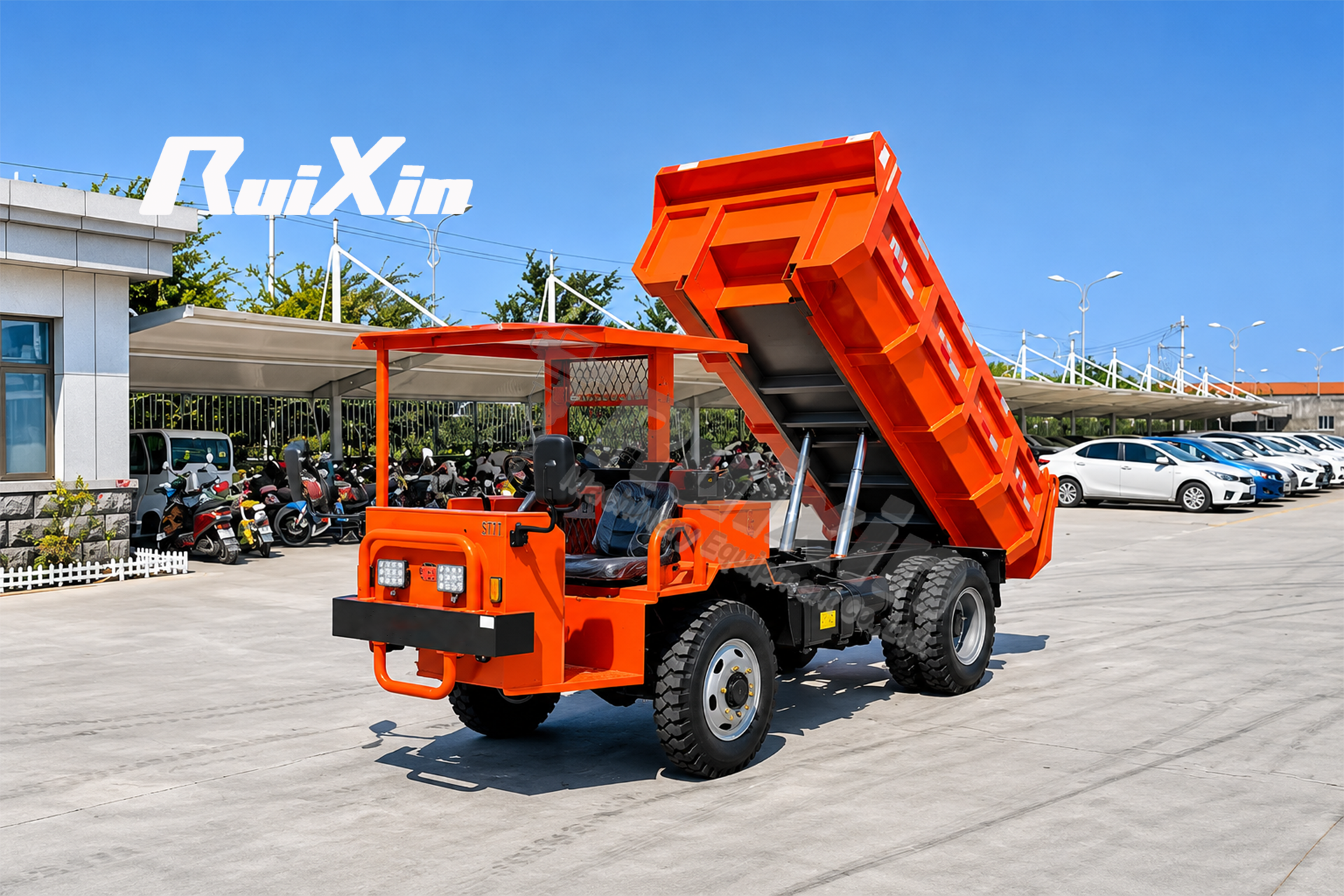
Front and rear axles may carry different loads and perform different functions. Some underground dump trucks use dual rear tires to distribute loads across more contact points.
Always confirm the original axle arrangement before replacing or modifying tires.
3. RUIXIN Mining Dump Truck Tire Specifications
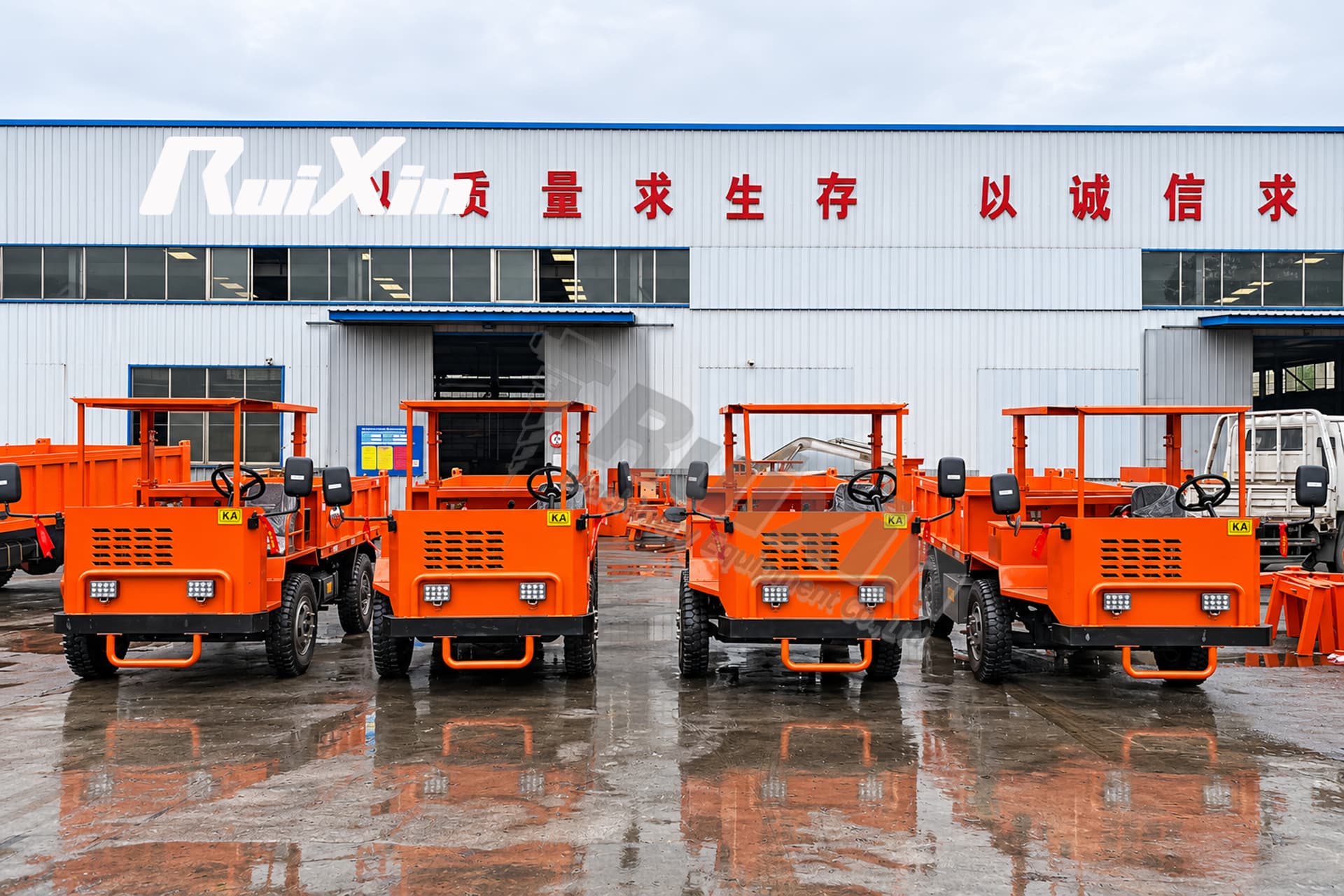
RUIXIN offers underground mining dump trucks in different payload classes, with tire configurations matched to individual vehicle designs.
| Model | Load Capacity | Tire Specification | Configuration |
|---|---|---|---|
| 8-ton model | 8–10 tons | 750-16 radial tire | Double rear |
| 16-ton model | 16–18 tons | 1000-20 steel wire tire | Standard product configuration |
| 20-ton model | 20 tons | 1000-20 radial tire | Double rear |
The specifications above are published product configurations. Buyers should confirm the exact tire model and load rating before ordering.
For example, the RUIXIN 8-ton underground mining dump truck uses 750-16 radial tires and is designed for underground material transportation.
The 16-ton mining dump truck uses 1000-20 steel wire tires, while the 20-ton underground mining dump truck uses 1000-20 radial tires with a double-rear configuration.
These examples show why tire specifications should be evaluated according to the complete vehicle configuration rather than payload alone.
4. Mining Dump Truck Tire Inspection and Maintenance
Regular inspections help identify tire problems before they cause unexpected downtime.
| Inspection Item | What to Check |
|---|---|
| Tread condition | Uneven wear, cuts, and missing tread |
| Sidewalls | Cracks, bulges, and visible damage |
| Tire pressure | Compliance with manufacturer specifications |
| Wheel components | Loose fasteners and damaged rims |
| Tire temperature | Unusual heat during operation |
Practical maintenance recommendations include:
Inspect tires before each operating shift.
Remove sharp foreign objects when safe to do so.
Avoid unnecessary impacts against tunnel walls.
Maintain the specified tire pressure.
Record tire replacement dates and abnormal wear.
Use compatible replacement tires.
For additional equipment maintenance information, see our underground mining truck safety guide.
5. Common Mistakes When Buying Mining Dump Truck Tires
Choosing Only by Price
Low purchase prices do not always mean lower operating costs. Tire service life and replacement frequency should also be considered.
Ignoring Axle Load Distribution
Tires must support the actual load applied to each axle. Total payload alone is not enough to determine the correct specification.
Changing Tire Dimensions Without Verification
Larger tires may affect ground clearance, steering clearance, and vehicle dimensions. Confirm compatibility before making changes.
Overlooking Replacement Availability
For overseas mining projects, buyers should consider the availability of matching tires and other commonly used spare parts. Tire replacement costs should also be included when evaluating mining dump truck operating costs.
6. Frequently Asked Questions
What tires are used on underground mining dump trucks?
Underground mining trucks commonly use mining-grade radial or steel wire tires, depending on vehicle design, load requirements, and operating conditions.
How do I choose the correct tire size?
Check the original tire specification, rim compatibility, axle configuration, load rating, and available clearance. Confirm replacement options with the vehicle manufacturer.
Are radial tires suitable for underground mining trucks?
Yes. Radial tires are used on various underground mining trucks. Their suitability depends on the original vehicle design, load rating, and road conditions.
How often should mining dump truck tires be inspected?
A visual inspection should be performed before each operating shift. More detailed inspections should follow the vehicle and tire manufacturer’s maintenance recommendations.
Can I install larger tires on my mining dump truck?
Not without checking compatibility. Larger tires may change vehicle height, ground clearance, and steering clearance. Manufacturer approval is recommended.
7. Choose the Right Mining Dump Truck Configuration
Selecting suitable mining dump truck tires requires matching tire dimensions, load ratings, construction, and traction characteristics with the actual underground working environment.
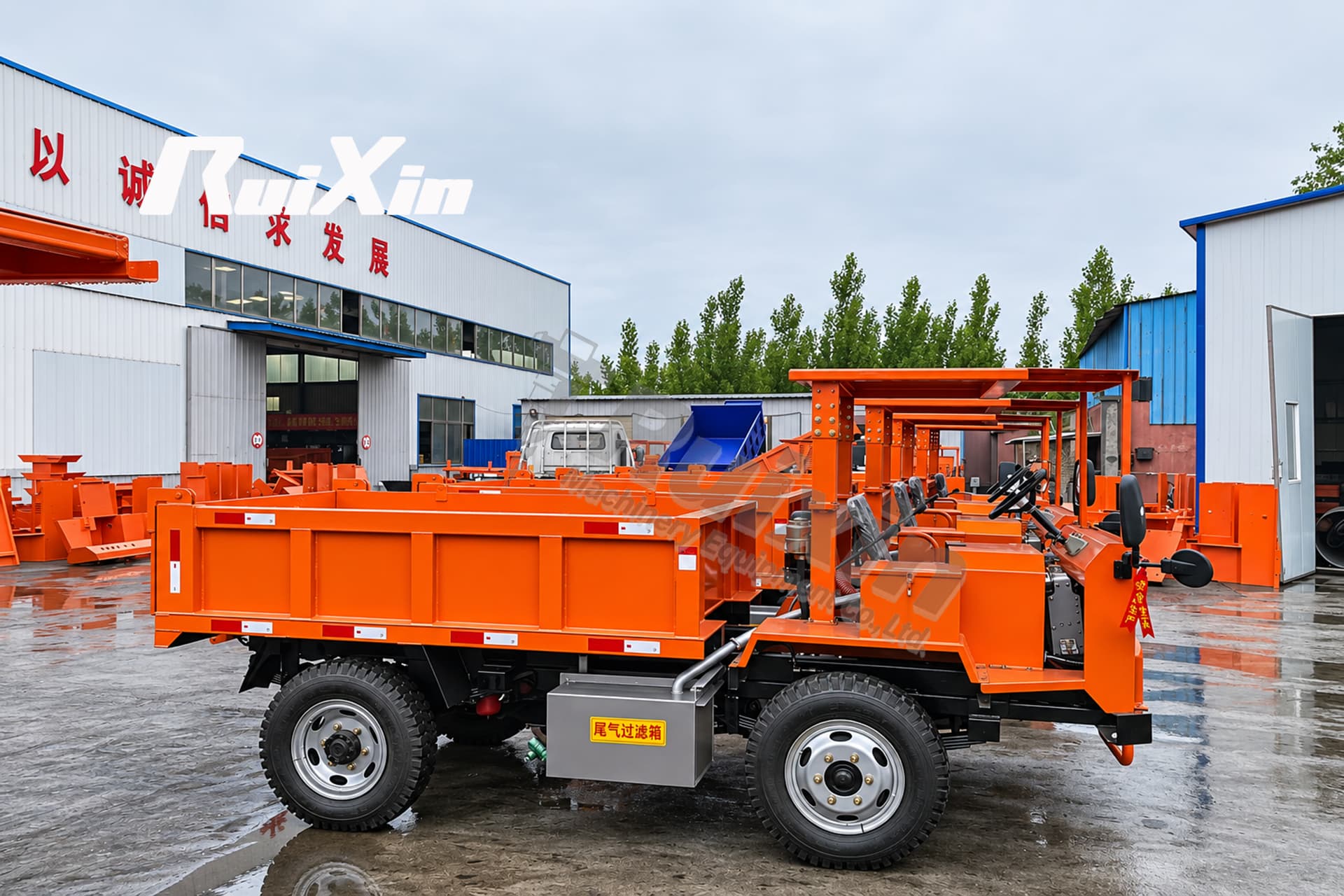
RUIXIN provides underground mining dump trucks with different payload capacities and configurations for various mining applications.
If you are planning to purchase mining dump trucks, send us your required payload, tunnel dimensions, road conditions, and operating requirements. Our team can help confirm a suitable equipment configuration.
Explore the RUIXIN underground mining dump truck series or contact our team for more information.
Contact RUIXIN EQUIPMENT
Website: https://miningdumpertruck.com/
Email: sales@ytequipment.net
WhatsApp / Phone: +86 173 5264 7687
Technical Review: RUIXIN EQUIPMENT Engineering Team
Published: November 25, 2026
Last Updated: November 25, 2026

 English
 Spanish
 Russian