
Mining Tricycle Selection for Underground Mining Operations
Introduction
A mining tricycle is a compact transport vehicle designed to move ore, rock, waste materials, and mining supplies through narrow mine roadways and underground tunnels. Choosing the right model depends on payload capacity, power source, roadway conditions, turning space, and unloading requirements.
For small and medium-sized mining operations, a 1-ton to 4-ton mining tricycle can provide a practical alternative to larger underground dump trucks. Electric models are suitable for mines that prioritize low emissions and reduced operating noise, while diesel models offer flexible refueling and longer operating periods. The best choice is the one that matches the mine’s daily transport requirements and working environment.
1. What Is a Mining Tricycle and Where Is It Used?
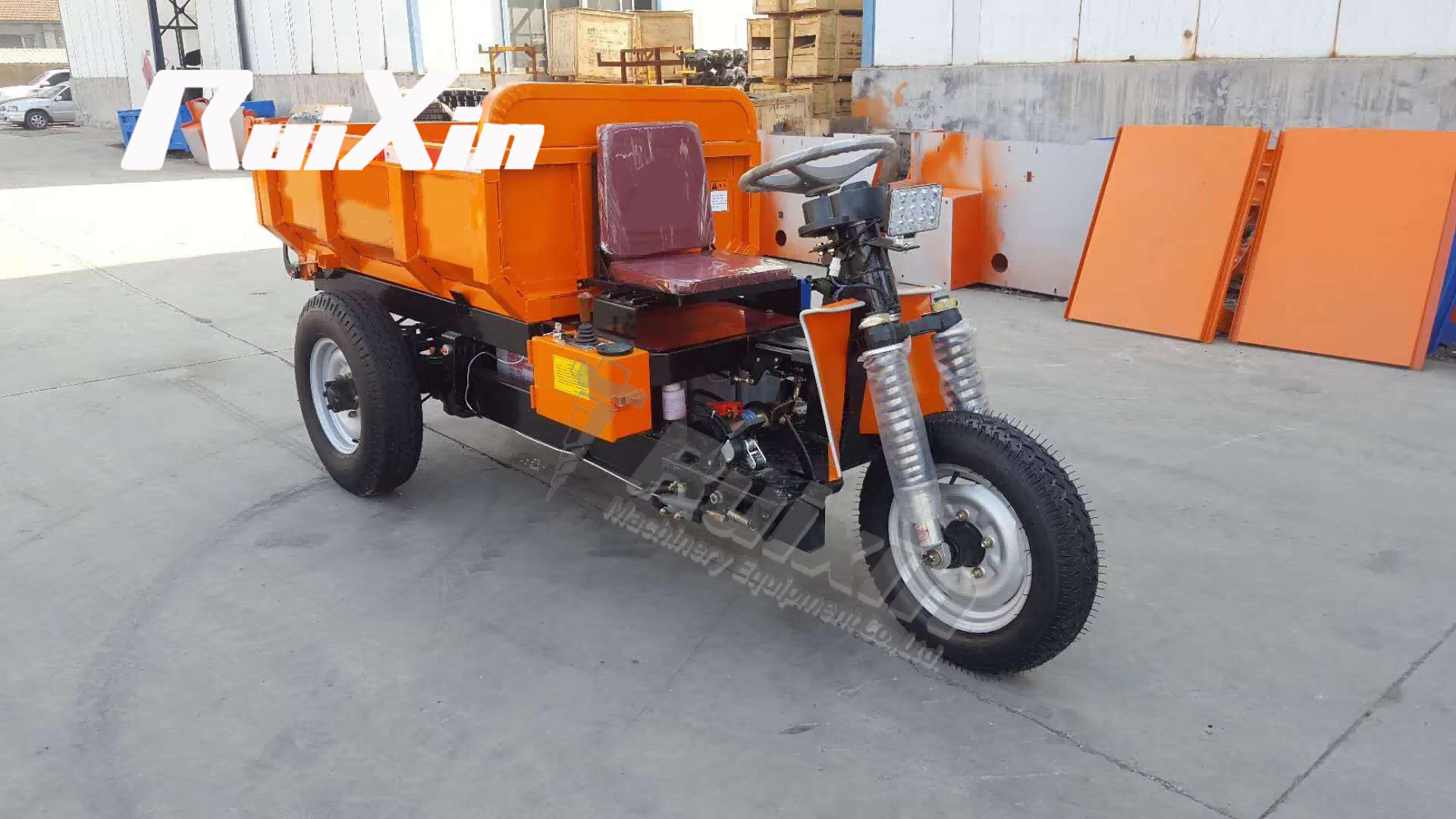
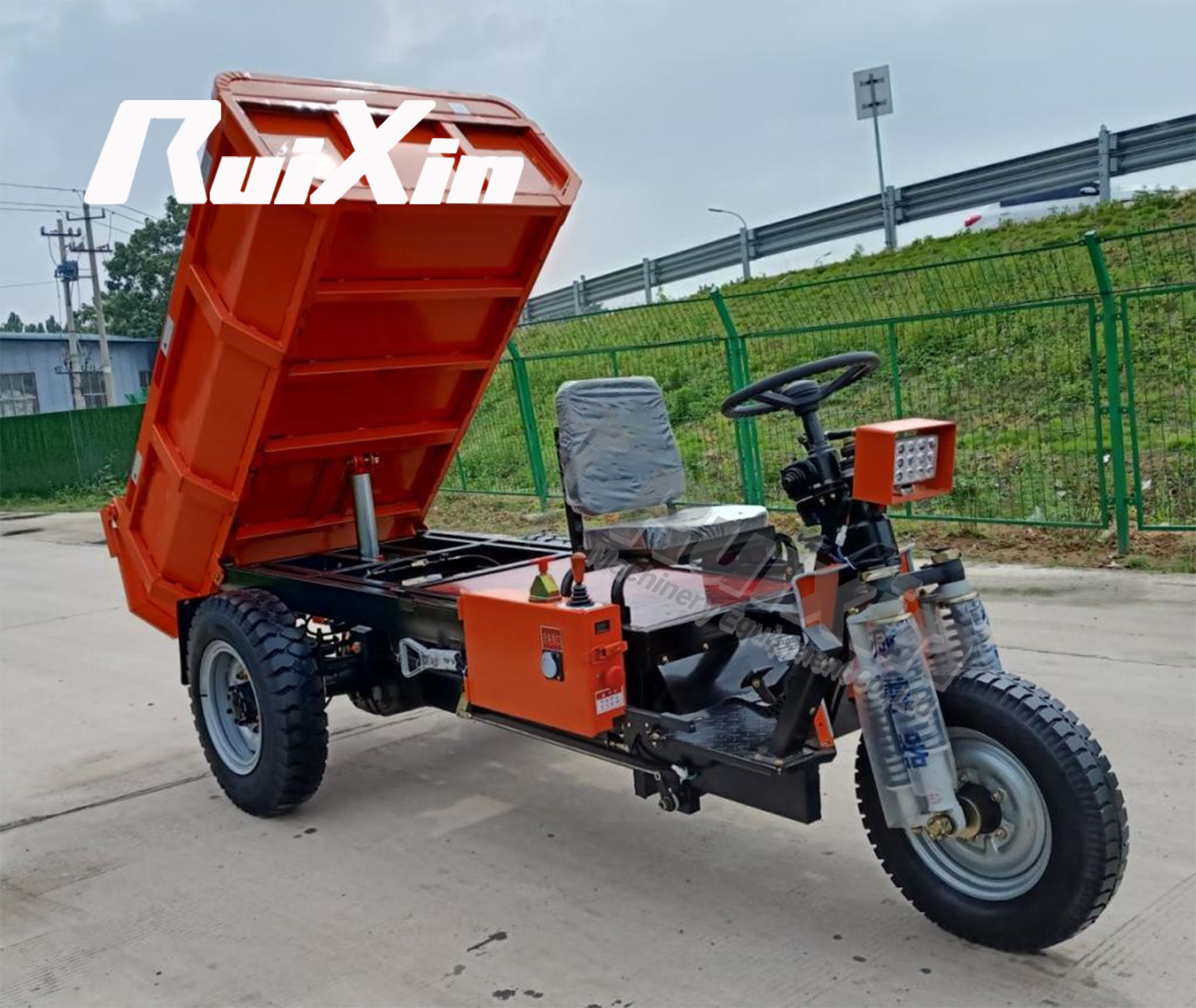
A mining tricycle is a three-wheeled mining transport vehicle equipped with a cargo box and, depending on the configuration, a hydraulic tipping system. Its compact structure allows it to operate in areas where conventional mining trucks may have difficulty turning or accessing narrow roadways.
Common applications include:
Underground ore transportation: Moving copper ore, gold ore, and other extracted materials from working faces to transfer points.
Tunnel muck removal: Transporting excavated rock and waste materials during underground construction.
Mining material handling: Moving tools, spare parts, and other supplies between working areas.
Small-scale mining operations: Supporting short-distance transportation where larger mining trucks are not economical.
Compared with conventional four-wheel mining dump trucks, three-wheel vehicles can offer a more compact transport solution for certain narrow working environments. However, roadway stability, traction, and load distribution must also be considered.
2. Electric vs. Diesel Mining Tricycles: Which Is Better?
The power source directly affects operating costs, maintenance requirements, and underground working conditions.
| Comparison | Electric Mining Tricycle | Diesel Mining Tricycle |
|---|---|---|
| Power source | Battery and electric motor | Diesel engine |
| Exhaust emissions | No exhaust emissions during operation | Produces exhaust emissions |
| Operating noise | Generally lower | Generally higher |
| Energy supply | Requires charging facilities | Requires diesel refueling |
| Maintenance | Battery and electrical system maintenance | Engine, fuel, and lubrication maintenance |
| Best application | Mines with charging access and ventilation concerns | Mines requiring flexible refueling and extended operation |
When to Choose an Electric Mining Tricycle
An electric mining tricycle is suitable for underground mines where exhaust emissions, heat, and noise need to be reduced.
Its main advantages include:
No exhaust emissions during operation.
Lower operating noise.
Convenient operation in enclosed underground environments.
Reduced dependence on diesel fuel.
Suitable for mines with accessible battery charging facilities.
For example, RUIXIN’s 1-ton electric mining tricycle is designed for short-distance material transportation in underground roadways.
When to Choose a Diesel Mining Tricycle
A diesel mining tricycle is worth considering when charging infrastructure is unavailable or when the mine requires flexible refueling arrangements.
Diesel models are commonly used for transporting ore and rock over repeated short-distance routes. Engine power, starting performance, steering, and braking systems should be evaluated according to the mine’s actual operating conditions.
RUIXIN’s 4-ton diesel three-wheeled dump truck is an option for operations requiring a higher payload capacity.
3. How Much Payload Capacity Does Your Mining Tricycle Need?
Payload capacity is one of the most important factors when selecting a mining tricycle. An undersized vehicle may require too many trips, while an oversized vehicle may increase purchase and operating costs unnecessarily.
Consider the following RUIXIN models:
| Model | Rated Payload | Power Type | Typical Application |
|---|---|---|---|
| 1-ton mining tricycle | 1,000 kg | Electric or diesel | Light material transportation |
| 2-ton mining tricycle | 2,000 kg | Electric | Medium-load underground transport |
| 3.5-ton mining tricycle | 3,500 kg | Electric | Higher-volume material transportation |
| 4-ton mining tricycle | 4,000 kg | Diesel | Heavy-duty mine transport |
Model availability and configurations should be confirmed with the manufacturer.
Calculate the Required Daily Transport Capacity
You can estimate daily transportation capacity using this formula:
Daily Transport Capacity = Payload per Trip × Trips per Day × Load Utilization Rate
For example, assume a mine uses a 2-ton mining tricycle to transport ore:
Rated payload: 2,000 kg
Trips per shift: 12
Average load utilization: 85%
Calculation:
2,000 × 12 × 85% = 20,400 kg
The estimated transportation capacity is 20.4 tons per shift.
This calculation helps determine whether one vehicle is sufficient or whether multiple mining tricycles are needed to meet production targets.
Remember that actual output depends on loading time, travel distance, road conditions, unloading time, and equipment availability.
4. Key Factors When Selecting a Mining Tricycle
Payload alone cannot determine whether a vehicle is suitable for underground mining. The following factors should also be evaluated.
4.1 Roadway Width and Turning Radius
Underground tunnels often have limited operating space. Before purchasing, measure:
Tunnel width and height.
Available turning space.
Roadway clearance.
Loading and unloading areas.
Compare these measurements with the vehicle’s overall dimensions and turning radius.
A compact mining tricycle is generally more suitable for restricted roadways, provided it has sufficient clearance and maneuverability.
4.2 Climbing Ability and Road Conditions
Mine roadways may include slopes, uneven surfaces, wet sections, and loose rock.
Check the vehicle’s full-load climbing ability rather than relying only on its unloaded performance. Tire selection, ground clearance, braking capacity, and axle strength also influence operating performance.
For example, RUIXIN’s 2-ton electric mining tricycle lists a full-load climbing ability of up to 6°. Actual suitability should be verified against the mine’s maximum roadway gradient and surface conditions.
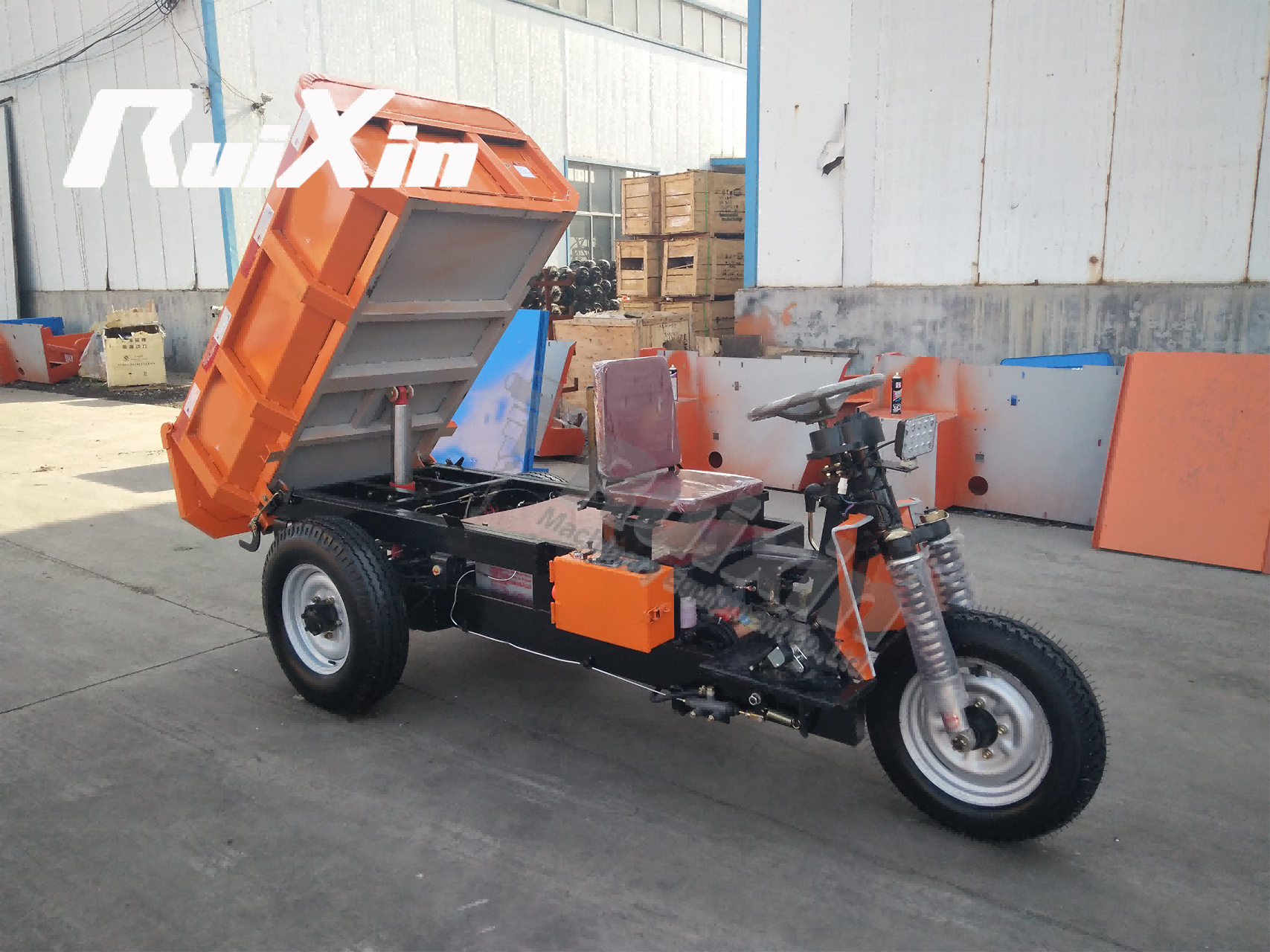
4.3 Cargo Box and Hydraulic Dumping System
The cargo box should match the type and volume of material being transported.
Consider:
Cargo box dimensions and volume.
Steel plate thickness.
Reinforced frame construction.
Hydraulic lifting capacity.
Dumping stability and unloading clearance.
For ore and rock transportation, a reinforced cargo box and reliable hydraulic tipping system can help support repeated loading and unloading operations.
4.4 Maintenance and Spare Parts Availability
Mining equipment operates under demanding conditions. Tire wear, hydraulic component wear, electrical faults, and engine maintenance can affect vehicle availability.
When evaluating a mining tricycles manufacturer, check whether it can provide replacement parts, technical documentation, and after-sales support.
For overseas mining projects, access to spare parts and remote technical guidance is particularly important.
5. Which RUIXIN Mining Tricycle Should You Consider?
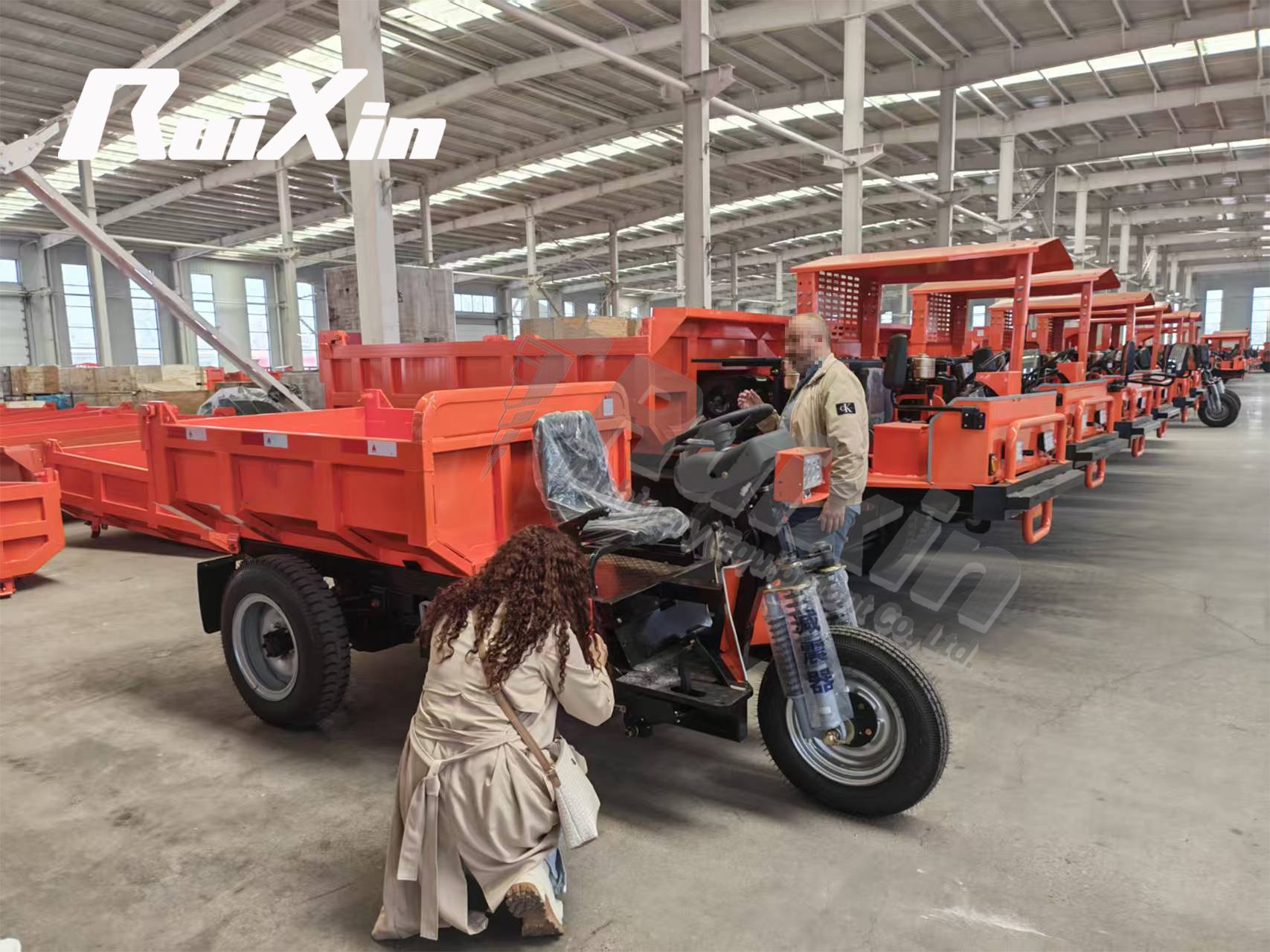
RUIXIN provides different mining tricycle configurations for underground transportation and small-scale mining operations.
Here are three product options worth comparing:
1-Ton Electric Mining Tricycle
Suitable for light-duty material transportation in narrow underground roadways. Its compact design and battery-powered drive make it an option for mines seeking to reduce exhaust emissions.
2-Ton Electric Mining Tricycle
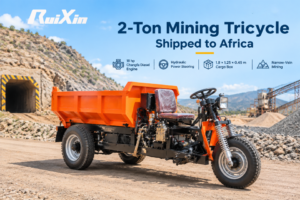
Equipped with a 7.5 kW AC motor, this model has a rated payload of 2,000 kg and a cargo box measuring 1,800 × 1,100 × 450 mm. It is suitable for medium-load transportation in underground mine tunnels.
3.5-Ton Electric Mining Tricycle
With a rated payload of 3,500 kg and a 10 kW AC motor, this model is designed for operations requiring higher transport capacity while maintaining a three-wheel vehicle configuration.
For mines that prefer diesel power, RUIXIN also offers 4-ton diesel mining tricycles.
Explore the RUIXIN Mining Tricycle Product Series to compare available configurations.
Frequently Asked Questions
1. What is the difference between a mining tricycle and a mining dump truck?
A mining tricycle is a three-wheeled transport vehicle generally designed for compact working areas and short-distance material transportation. A conventional mining dump truck usually has four or more wheels and is designed for different payload and roadway requirements.
2. Are electric mining tricycles suitable for underground mines?
Yes. Electric mining tricycles can be suitable for underground mines because they produce no exhaust emissions during operation and generally generate less operating noise. However, battery capacity, charging time, roadway conditions, and operating shifts must be considered.
3. What payload capacities are available for mining tricycles?
Mining tricycle payload capacities vary by manufacturer and configuration. RUIXIN offers models including 1-ton, 2-ton, 3.5-ton, and 4-ton options.
4. Can a mining tricycle operate on sloped mine roads?
Yes, provided its rated climbing ability, braking system, traction, and load capacity match the roadway conditions. Always verify the full-load climbing limit before operation.
5. How do I find a reliable mining tricycles manufacturer?
Look for a manufacturer with mining equipment production experience, clear technical specifications, customization capabilities, spare parts support, and overseas technical assistance. Request product details and confirm the configuration before ordering.
Conclusion: Choose a Mining Tricycle That Matches Your Mine
Selecting the right mining tricycle requires more than comparing payload capacities. Roadway dimensions, power source, climbing ability, cargo box design, and maintenance support all influence long-term operating performance.
Whether your project requires a compact 1-ton electric model, a 2-ton transport vehicle, or a higher-capacity diesel mining tricycle, matching the equipment to actual working conditions is essential.
RUIXIN provides mining tricycles and underground mining transport equipment for different mining applications. Contact our team to discuss your required payload, roadway dimensions, power preference, and operating conditions.
Related Products
- Mining Tricycle Series → Tricycle Dump Truck Series
- 2-Ton Mining Tricycle → 2-Ton Mining Tricycle
- Underground Dump Truck → Underground Mining Dump Truck
- Underground LHD Loader → Underground Mining Loader
Technical Review: RUIXIN EQUIPMENT Engineering Team
Published: November 16, 2026
Last Updated: November 16, 2026
 English
 Spanish
 Russian