
African Copper Mine: 8-Ton Mining Dump Truck for Improved Mining Haul Cycle Time
1. Project Background
Underground copper mining operations depend on reliable material transportation between the production area and the unloading point. In narrow or low-clearance tunnels, the mining haul cycle time is affected by more than the truck’s rated payload. Tunnel dimensions, haul distance, road gradient, loading time, dumping time, and return travel all influence daily transportation performance.
For an African underground mining application, RUIXIN’s underground mining dump truck range provides options for matching the haulage vehicle to the working environment. The equipment selection should consider the mine’s available roadway space, material volume, loading equipment, and required transportation capacity.
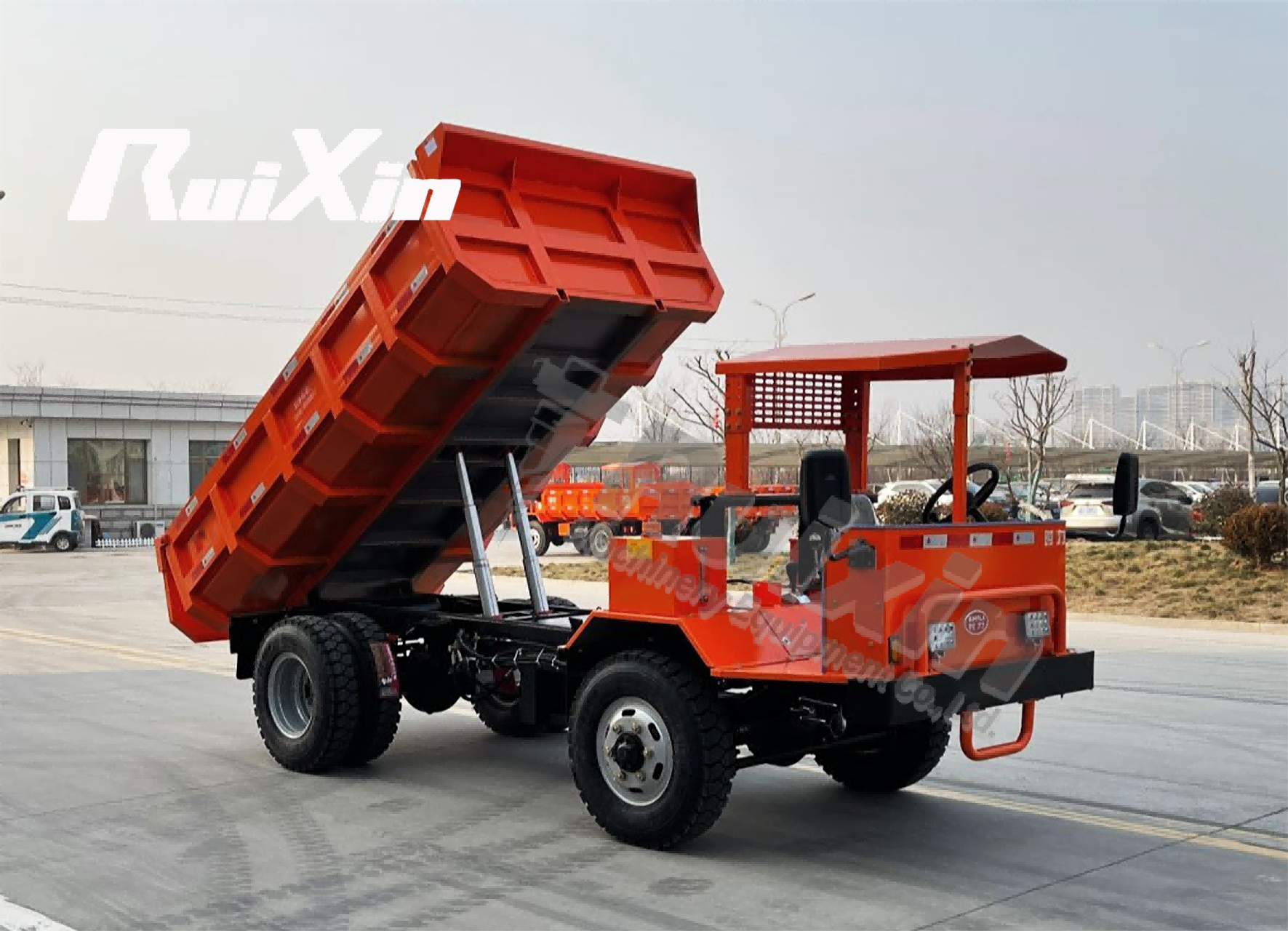
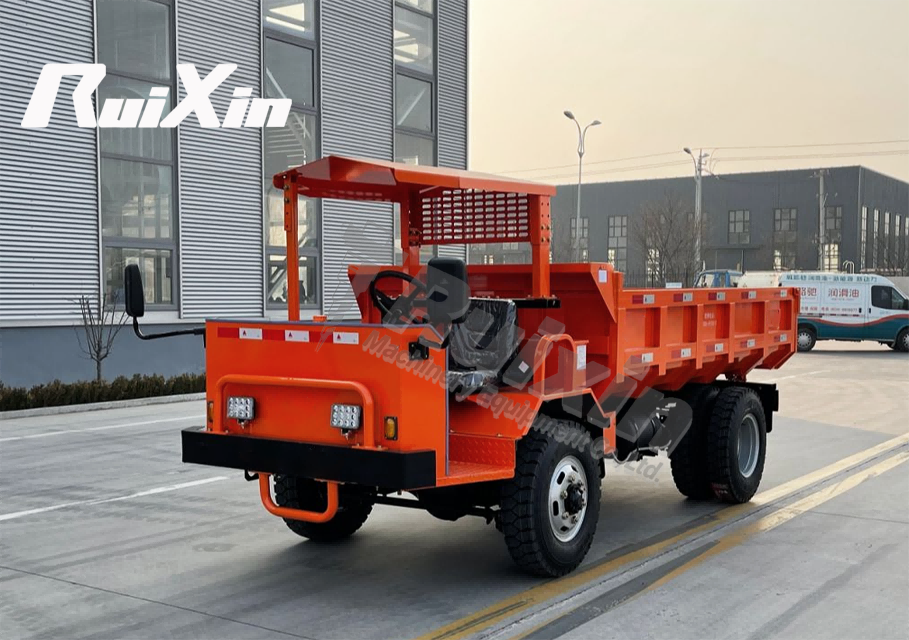
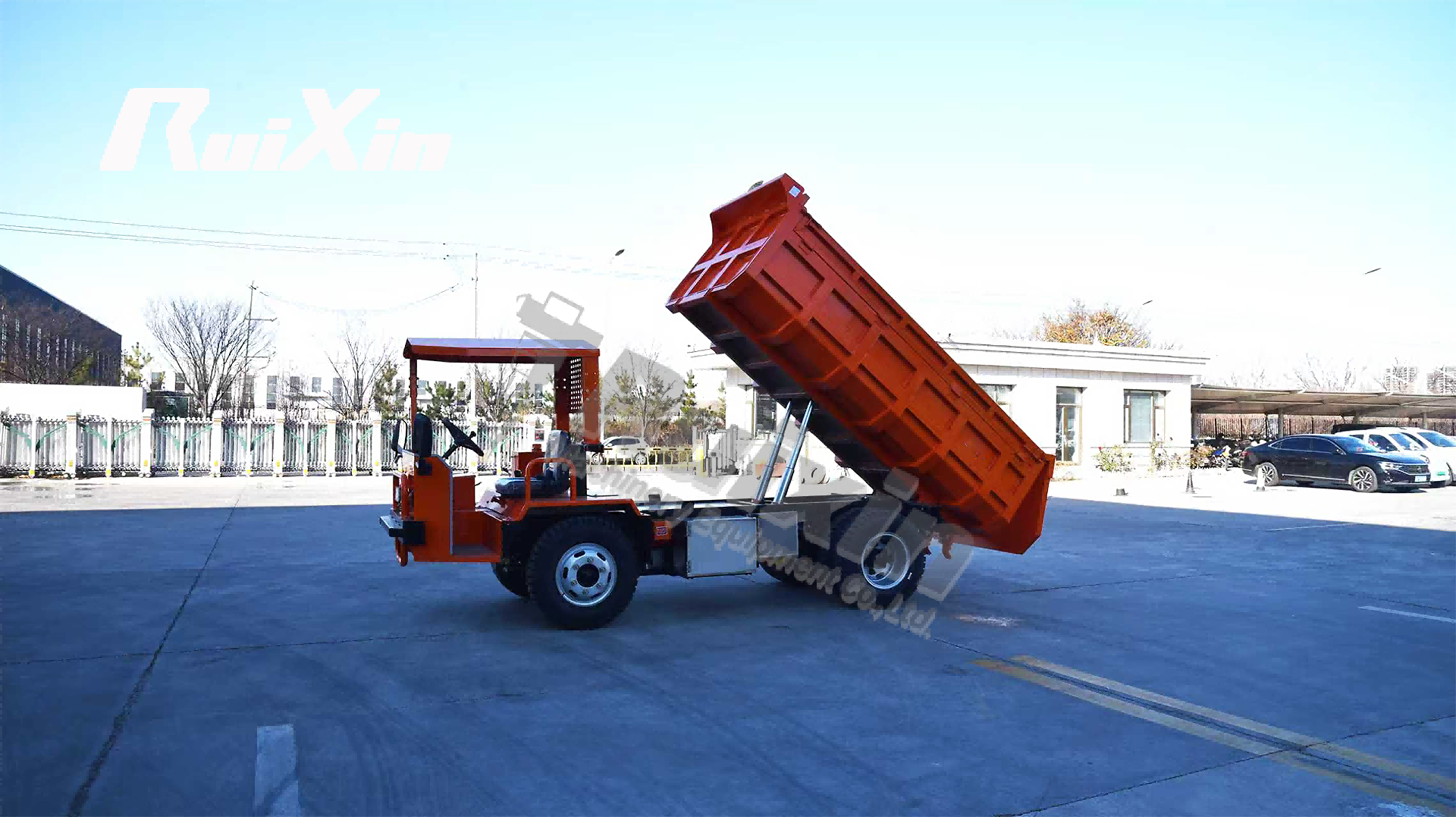
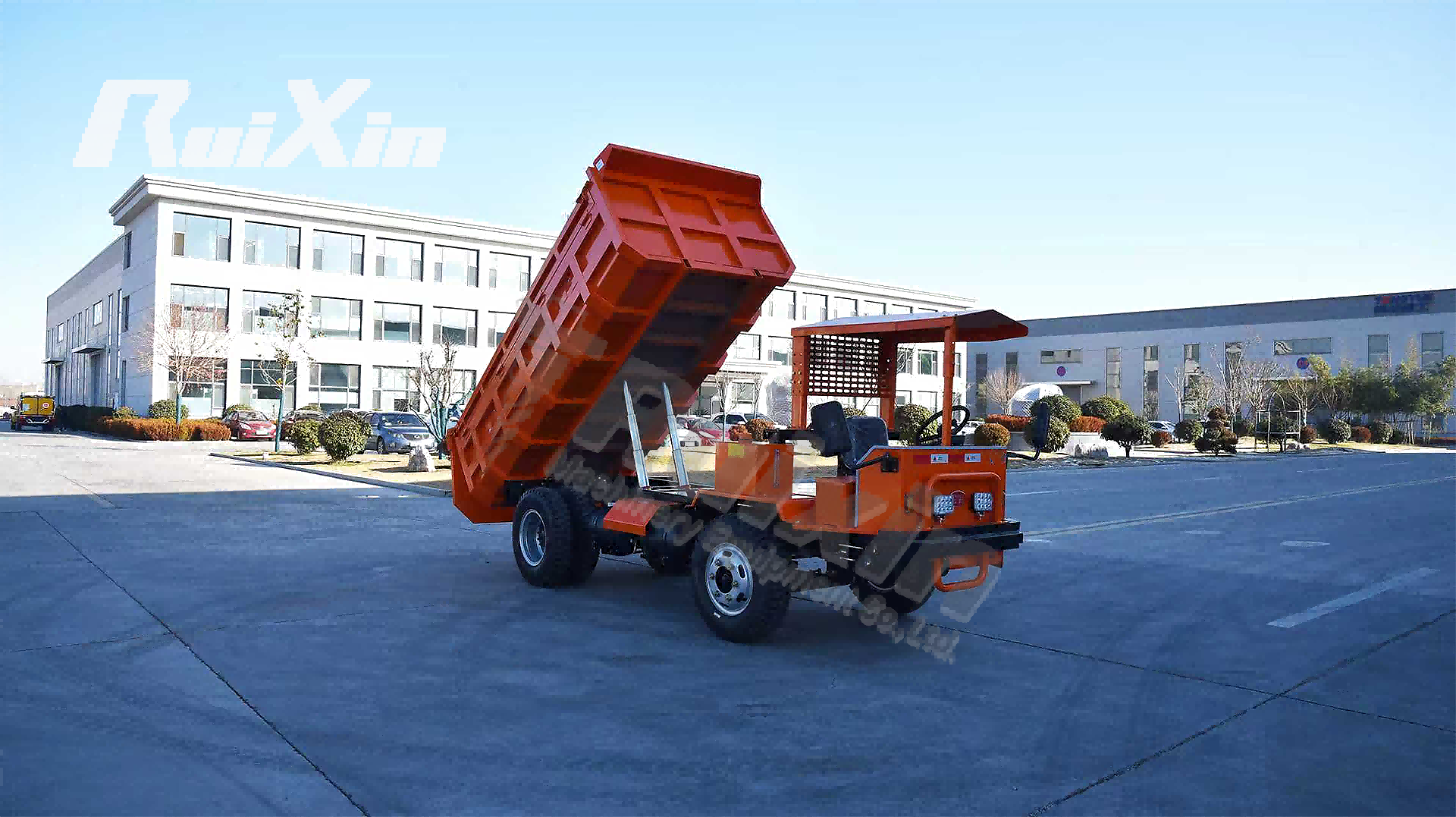
An 8-ton mining dump truck can be considered where the operation needs a balance between payload and maneuverability. RUIXIN’s 8-ton model is listed with a 4.1 m³ cargo box, an overall size of 5,200 × 1,770 × 1,750 mm, and an 81 kW diesel engine. These specifications provide a reference for evaluating equipment suitability before a site-specific configuration is confirmed.
Project objective: Evaluate how an appropriately sized underground mining dump truck can support a more consistent haulage cycle while maintaining compatibility with the tunnel environment and loading process.
2. Problems and Operating Constraints
- Limited tunnel space
The truck’s overall width, height, and turning space must match the underground roadway.
- Mining haul cycle time
Loading, loaded travel, dumping, and return travel all contribute to the total cycle time.
- Road gradient and ground conditions
The truck must be evaluated for climbing capability, traction, and braking requirements under loaded operating conditions.
- Loader and truck matching
The loading equipment should be compatible with the truck’s cargo capacity to reduce unnecessary waiting time.
- Continuous underground transportation
The selected powertrain, maintenance arrangements, and operating conditions should support the required working schedule.
3. Equipment Selection and Mining Haul Cycle Time Analysis
3.1 Selected Equipment
For this application-based assessment, the RUIXIN 8-ton underground mining dump truck is used as the reference model. The final selection should be based on the customer’s measured tunnel conditions and transportation requirements.
Parameter | Reference specification |
|---|---|
Equipment | Underground mining dump truck |
Rated load | 8 tons |
Cargo box volume | 4.1 m³ |
Overall dimensions | 5,200 × 1,770 × 1,750 mm |
Engine power | 81 kW (110 HP) |
Gearbox | 545, 12-speed high-low range |
Climbing ability | 25% |
Cargo box dimensions | 3,400 × 1,750 × 750 mm |
The specifications above are taken from the published product page. Payload, box volume, and climbing capability should not be treated as a guarantee of a specific site cycle time.
3.2 Why Equipment Matching Matters
Mining haul cycle time refers to the time required for a truck to complete one full transportation cycle. A practical cycle includes loading, loaded travel, dumping, and returning to the loading area.
A basic calculation is:
Tcycle=Tloading+Tloaded travel+Tdumping+TreturnT_{cycle}=T_{loading}+T_{loaded\ travel}+T_{dumping}+T_{return}Tcycle=Tloading+Tloaded travel+Tdumping+Treturn
The total time can also include queueing, maneuvering, and other delays where applicable.
For example, the following values are illustrative only, not customer measurement results:
Cycle component | Example time |
|---|---|
Loading | 5 min |
Loaded travel | 10 min |
Dumping | 3 min |
Return travel | 8 min |
Total cycle time | 26 min |
If the truck completes 26-minute cycles continuously, the theoretical cycle count is approximately 2.31 trips per hour. Actual production will depend on operating hours, loading capacity, traffic, road conditions, and other interruptions.
A more practical way to estimate material movement is:
Qhourly=Payload×Trips per hourQ_{hourly}=Payload\times Trips\ per\ hourQhourly=Payload×Trips per hour
This calculation should be adjusted for payload utilization and actual operating availability. The purpose of the analysis is to identify potential delays and compare equipment options—not to promise a specific production output.
3.3 Configuration Considerations
The 8-ton truck’s dimensions and payload should be assessed against the tunnel’s available clearance. Its published 25% climbing ability is a reference specification, but actual operation on a mine ramp requires verification of slope, surface conditions, load, and braking performance.
The equipment matching process should focus on:
Tunnel compatibility: Check the overall vehicle dimensions, turning area, and clearance.
Payload utilization: Consider material density, box volume, and safe loading practices.
Loader matching: Evaluate the number of bucket loads and loading time.
Road conditions: Review ramp gradient, haul distance, surface conditions, and braking requirements.
Cycle time measurement: Record actual loading, travel, dumping, and waiting times at the site.
RUIXIN’s product range also includes 10-ton underground mining dump trucks and 12-ton underground mining dump trucks. These may be evaluated when the roadway dimensions and production requirements support higher payloads. The larger truck should not be selected solely because of its rated capacity; the impact on maneuvering, loading, and transportation time must also be considered.
4. Delivery and Commissioning Process
Technical confirmation
Review the tunnel dimensions, payload requirements, haul distance, road gradient, and loading equipment.
Production and assembly
Complete the vehicle assembly and verify the specified configuration according to the confirmed order.
Factory inspection
Check key vehicle systems and conduct the applicable factory tests before shipment.
Loading and transportation
Prepare the truck for shipment and arrange transportation according to the destination and logistics requirements.
Site commissioning
Inspect the vehicle at the mine, confirm operating conditions, and carry out the required commissioning and operator guidance.
Cycle time assessment
Record the initial operating data, including loading time, travel time, dumping time, and return time, to establish a site-specific baseline.
5. Results and Performance Evaluation
Performance indicator | Measurement method |
|---|---|
Total haul cycle time | Record the complete loaded and return cycle |
Loading time | Measure truck waiting and loading duration |
Travel time | Record loaded and empty travel separately |
Dumping time | Measure unloading and maneuvering time |
Daily trips | Count completed haulage cycles |
Daily material volume | Calculate actual payload × completed trips |
Equipment availability | Record operating time and downtime |
6. Case Study Keywords
underground copper mining equipment
mining haulage efficiency
underground ore transportation
7. Conclusion
Improving mining haul cycle time requires a complete assessment of the transportation process, from loading and travel to dumping and return. An appropriately sized underground mining dump truck can support the haulage system when its payload, dimensions, powertrain, and operating characteristics match the mine’s conditions.
RUIXIN provides underground mining dump trucks in multiple payload configurations, including 8-ton, 10-ton, and 12-ton options, as well as other underground mining equipment. The final model selection should be based on the mine’s actual roadway dimensions, haul distance, gradient, production target, and loading arrangement.
8. CTA
Planning an underground mining haulage project?
Send us your tunnel width and height, haul distance, road gradient, required payload, and daily transportation target. The RUIXIN team can help evaluate a suitable underground mining dump truck and recommend a configuration for your working conditions.


 English
  Spanish
  Russian